Photographed with
Nikon Z9 · NIKKOR Z 150–600 mm f/5.6–6.3 VR · Nikon Z TC-2.0x · Absolute Eclipse Solar Filter Sheet (OD ≥ 5.6)
There are photographs that come into being within seconds.
And there are photographs that begin weeks — sometimes months — before the shutter is ever pressed.
The total solar eclipse of 12 August 2026 undoubtedly belongs to the second kind.
While millions of people will only look up at the sky for a few minutes, the real work for photographers begins long before.
Choosing a location. Watching weather models. Testing exposure. Preparing equipment. And above all: building an absolutely safe solar filter.
Without a suitable filter, lens and sensor can be permanently damaged after only a short time. And under no circumstances may you look through the optical viewfinder — or directly at the sun — without proper protection.
For my NIKKOR Z 150–600 mm I did not want to compromise. Since I could not find a matching filter holder, I decided to build one tailored precisely to my equipment.
Because some images begin long before the first ray of sunlight ever touches the sensor.
The total solar eclipse of 2026
On 12 August 2026 the Moon's umbra will sweep across parts of Europe.
Prime viewing locations along the path of totality:
Northern Spain · Iceland · Greenland
A partial eclipse will be visible from:
Portugal · France · Italy · Austria · Germany · Switzerland
For many European photographers, this is the best opportunity in decades to photograph a total solar eclipse without long-distance travel.
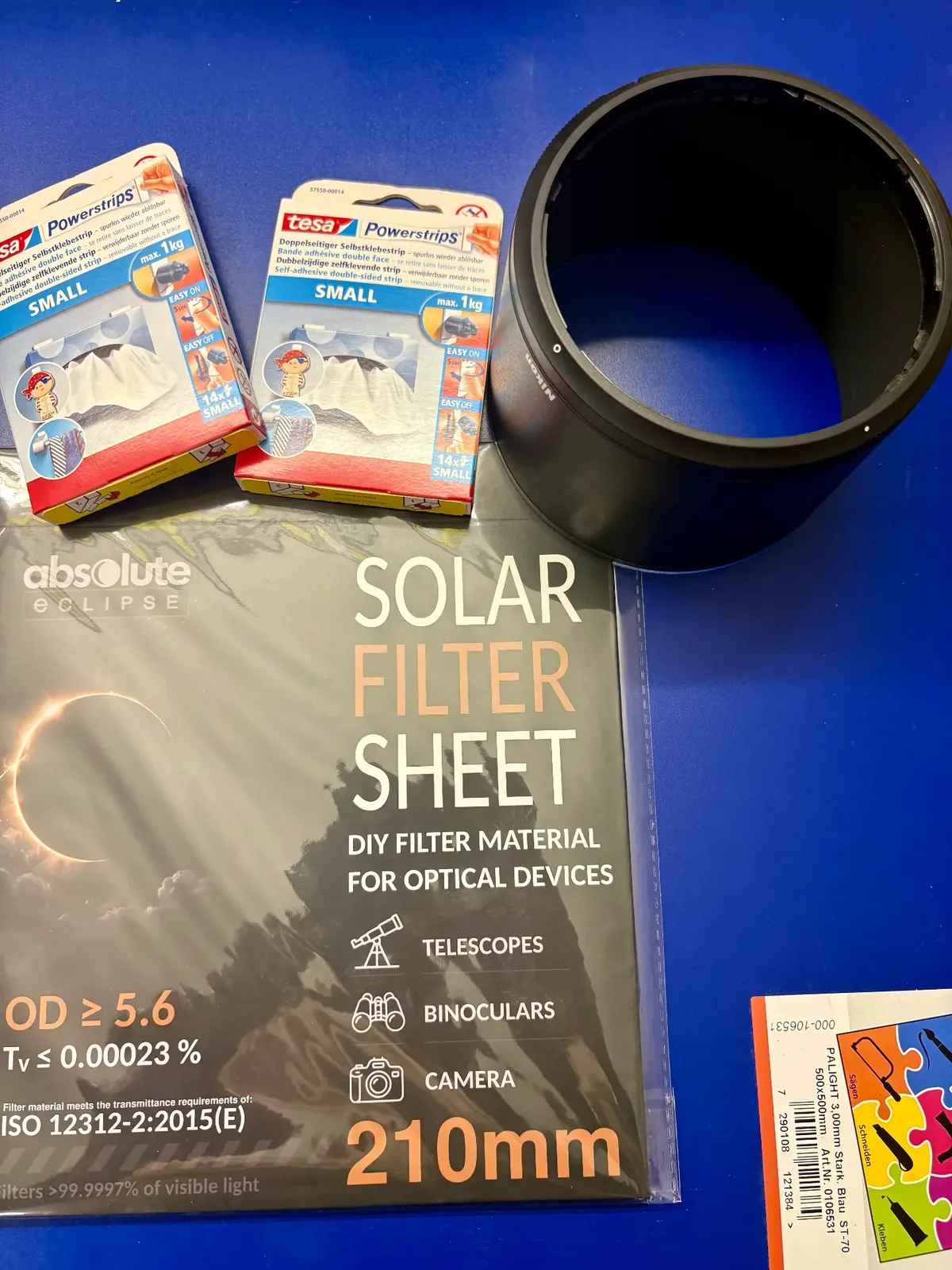
The materials
Every extraordinary photograph begins with the right tools.
What I used:
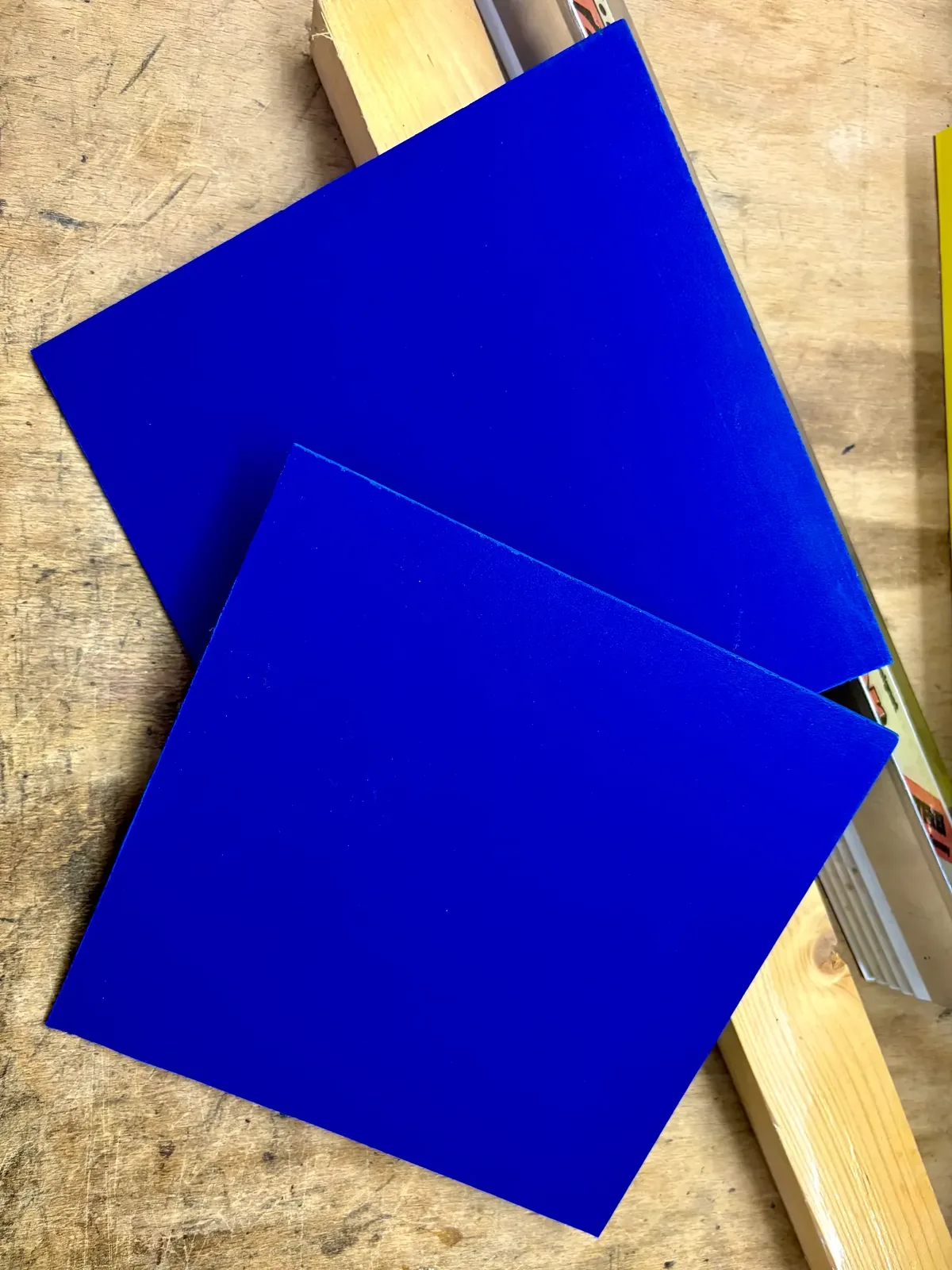
Absolute Eclipse Solar Filter Sheet (OD ≥ 5.6) · two PVC panels · Tesa Powerstrips · the original lens hood of the NIKKOR Z 150–600 mm · cutter · marker
The filter was intentionally not attached directly to the lens.
Instead, I built a construction that fits precisely inside the lens hood. This leaves the lens itself untouched and allows the filter to be mounted or removed within seconds.
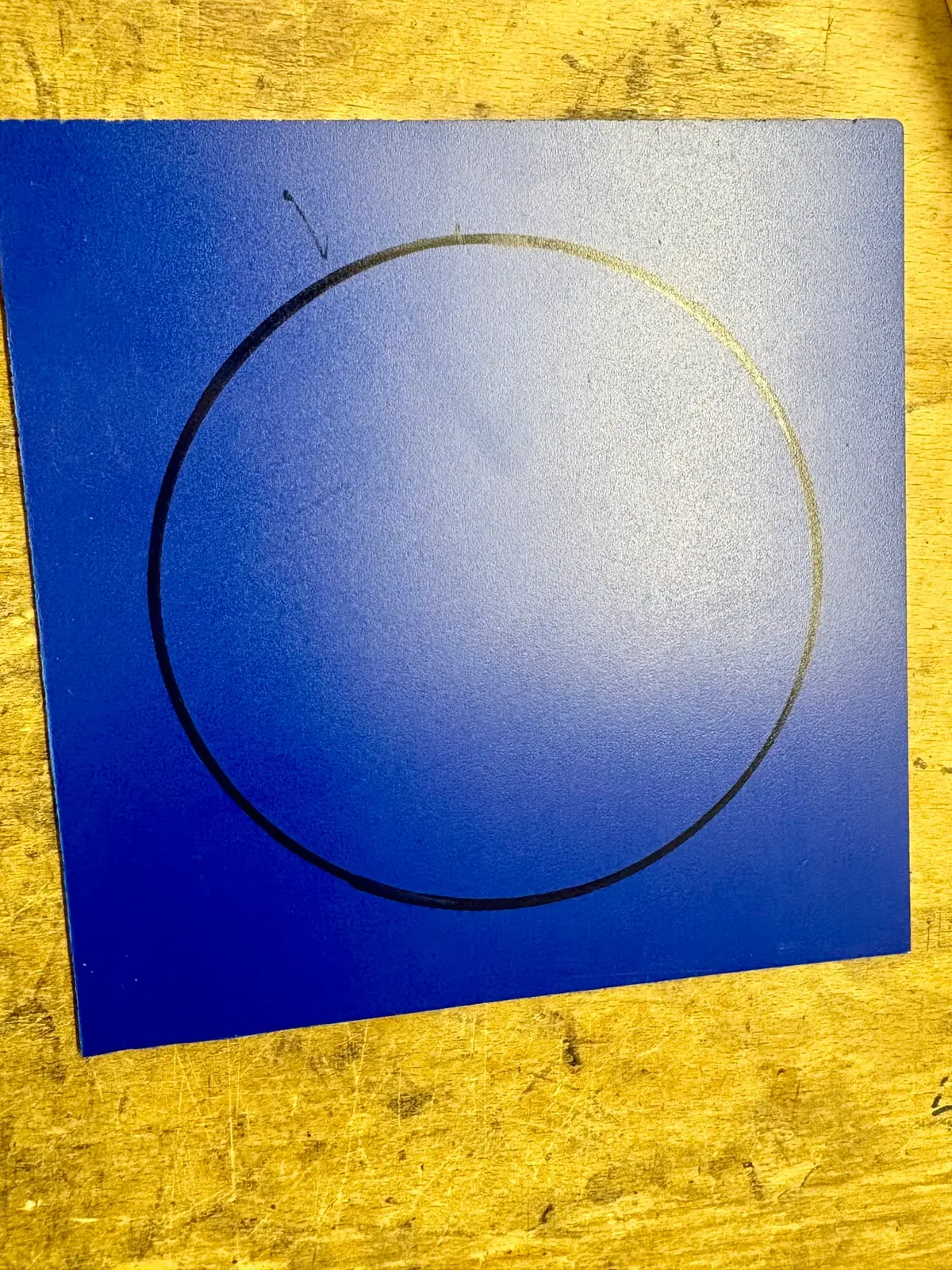
Precision begins with marking
The original lens hood served as the template.
Instead of relying on theoretical measurements, the actual inner diameter was transferred directly.
Especially with a DIY construction, this simple step saves a lot of rework later — and guarantees a perfect fit.
Two identical frames
The construction consists of two identical carrier plates.
Between them, the delicate solar filter foil will later be sandwiched.
This sandwich design protects the foil permanently and at the same time prevents any tension in the material.
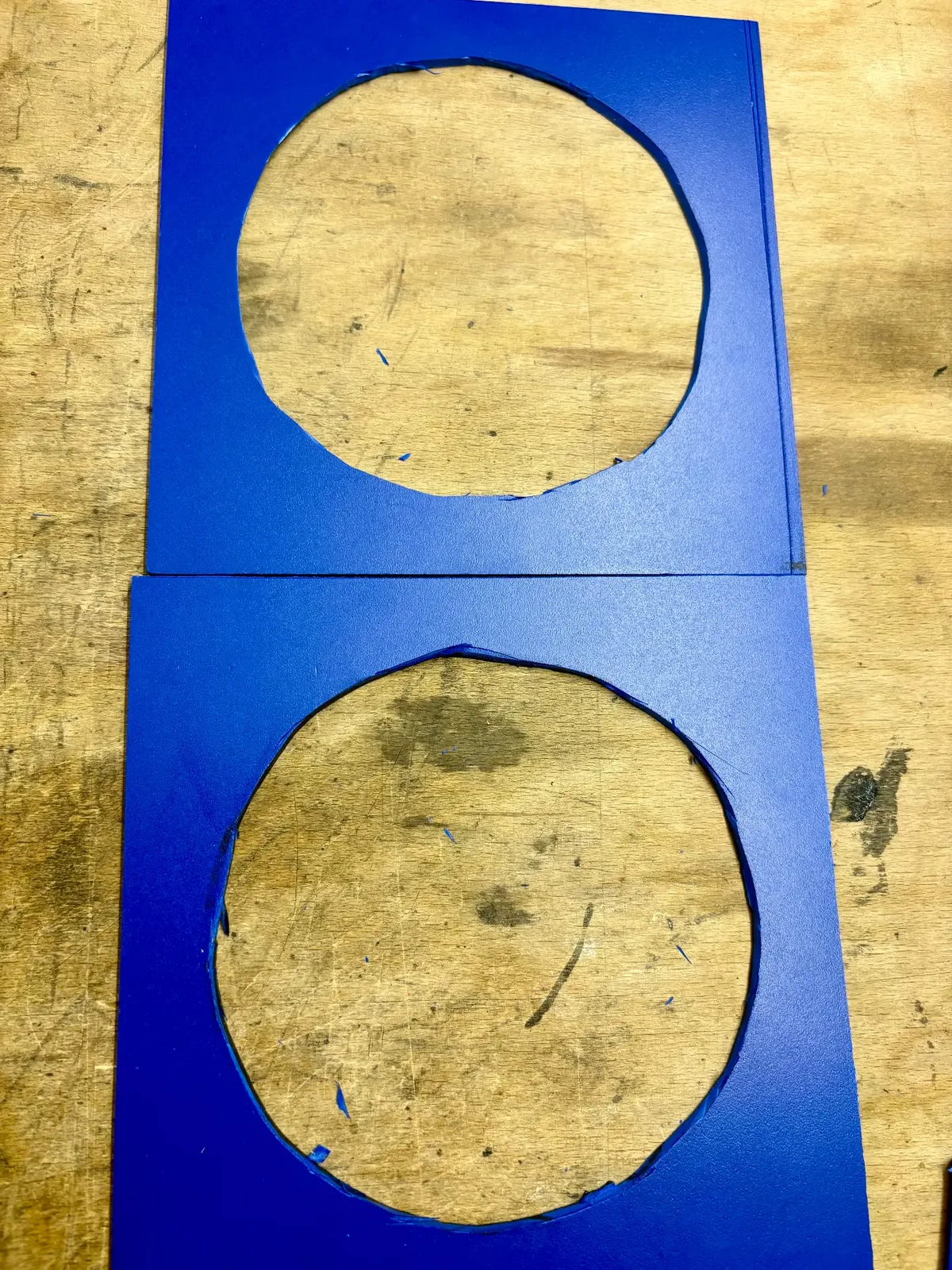
The cut
The opening was cut out by hand with a cutter.
Perfect machine precision was not required.
What mattered was the largest possible free aperture combined with sufficient stability of the frame.
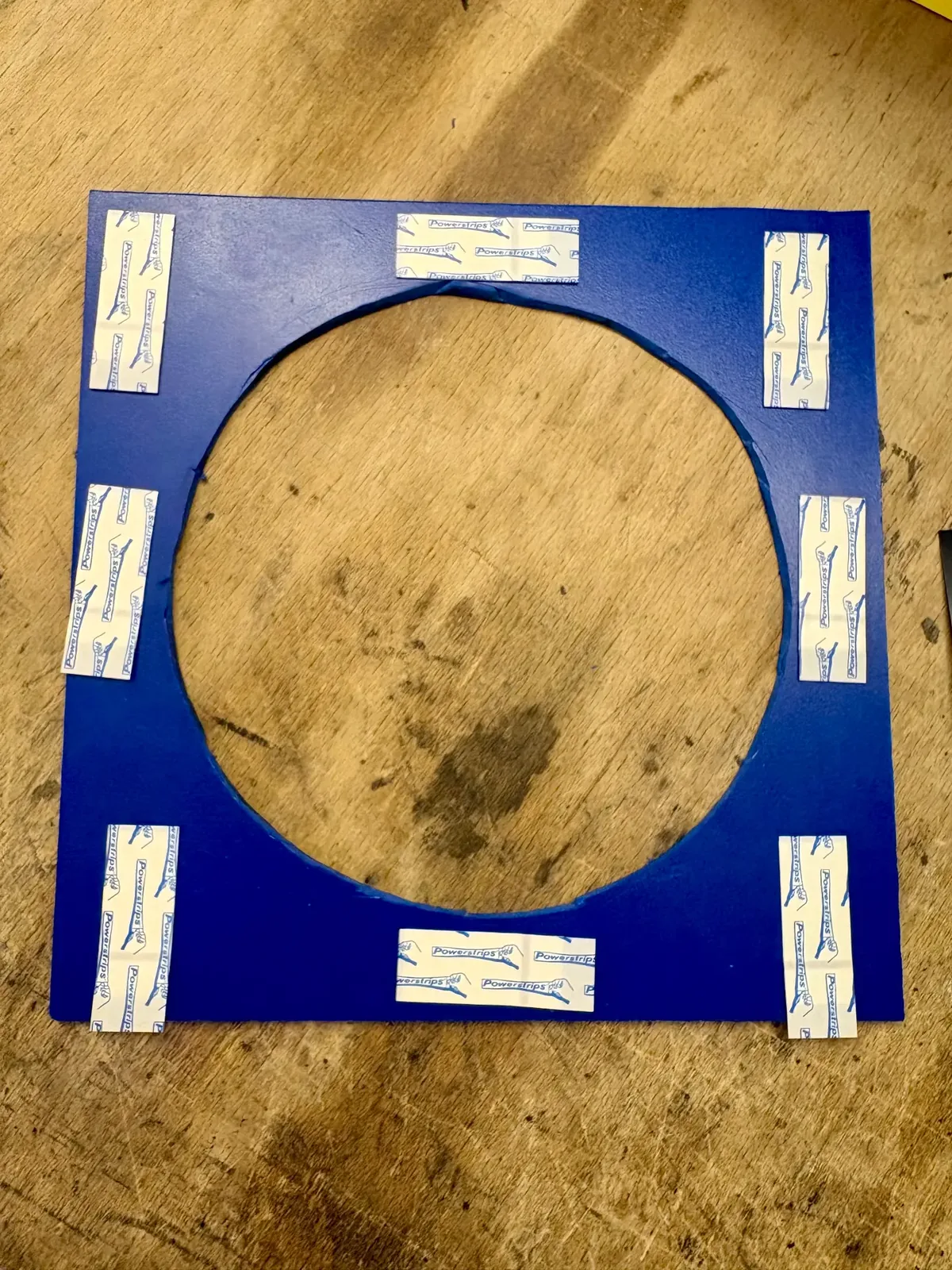
Preparing the assembly
Several Tesa Powerstrips will later connect the two frames.
They also serve a second, equally important purpose:
They create a small gap between the two panels, so the delicate solar filter foil is never compressed.
A simple, lightweight construction — and one that can be undone at any time without leaving traces.
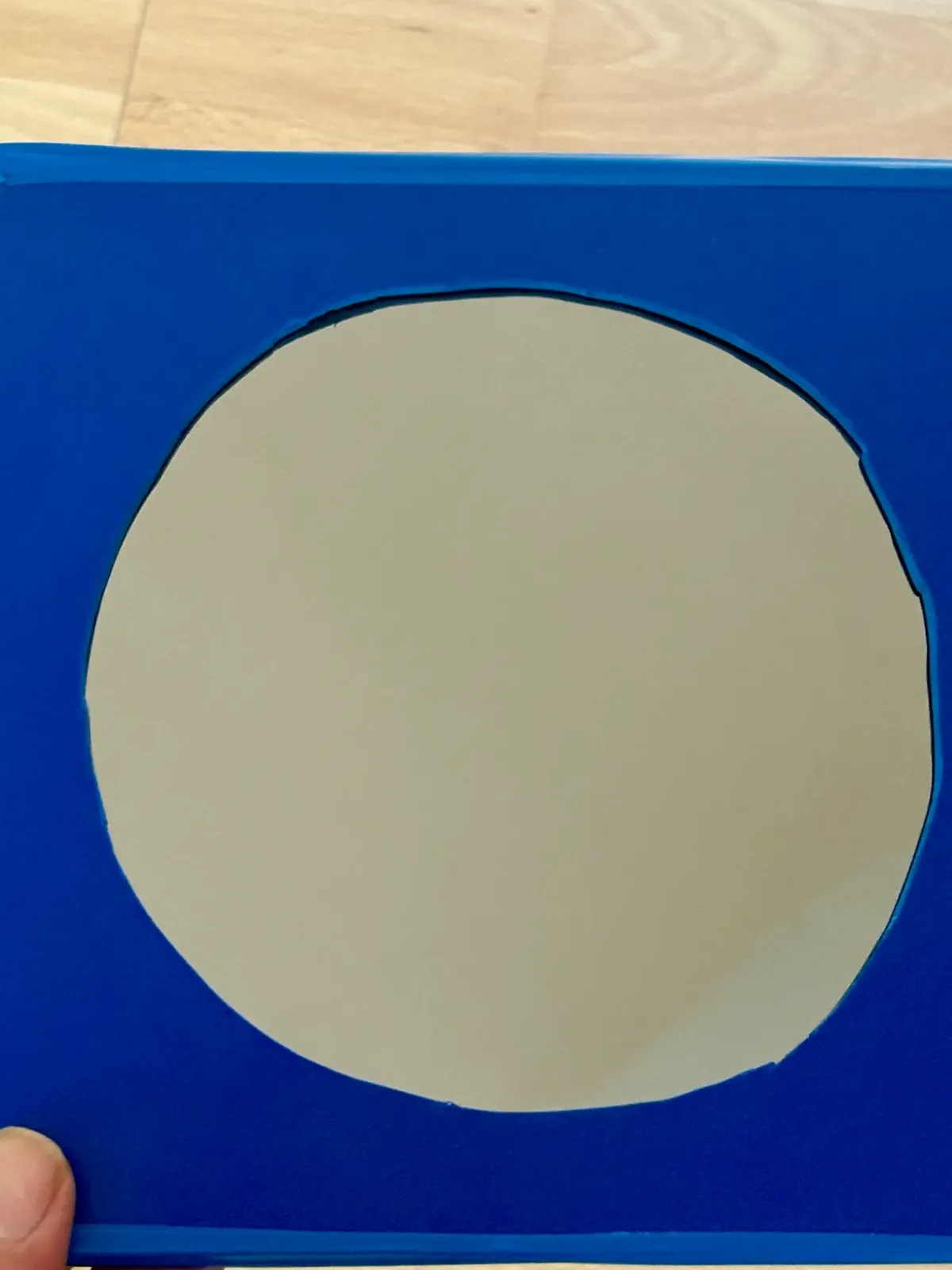
The most delicate phase
The solar filter foil was now placed between both frames.
One crucial rule applies here:
The foil must never be stretched tight.
It should sit loosely and free of tension. Small waves are completely uncritical and do not affect image quality. Scratches or tiny holes, however, would render the filter unusable immediately.
This step in particular demands the greatest care.
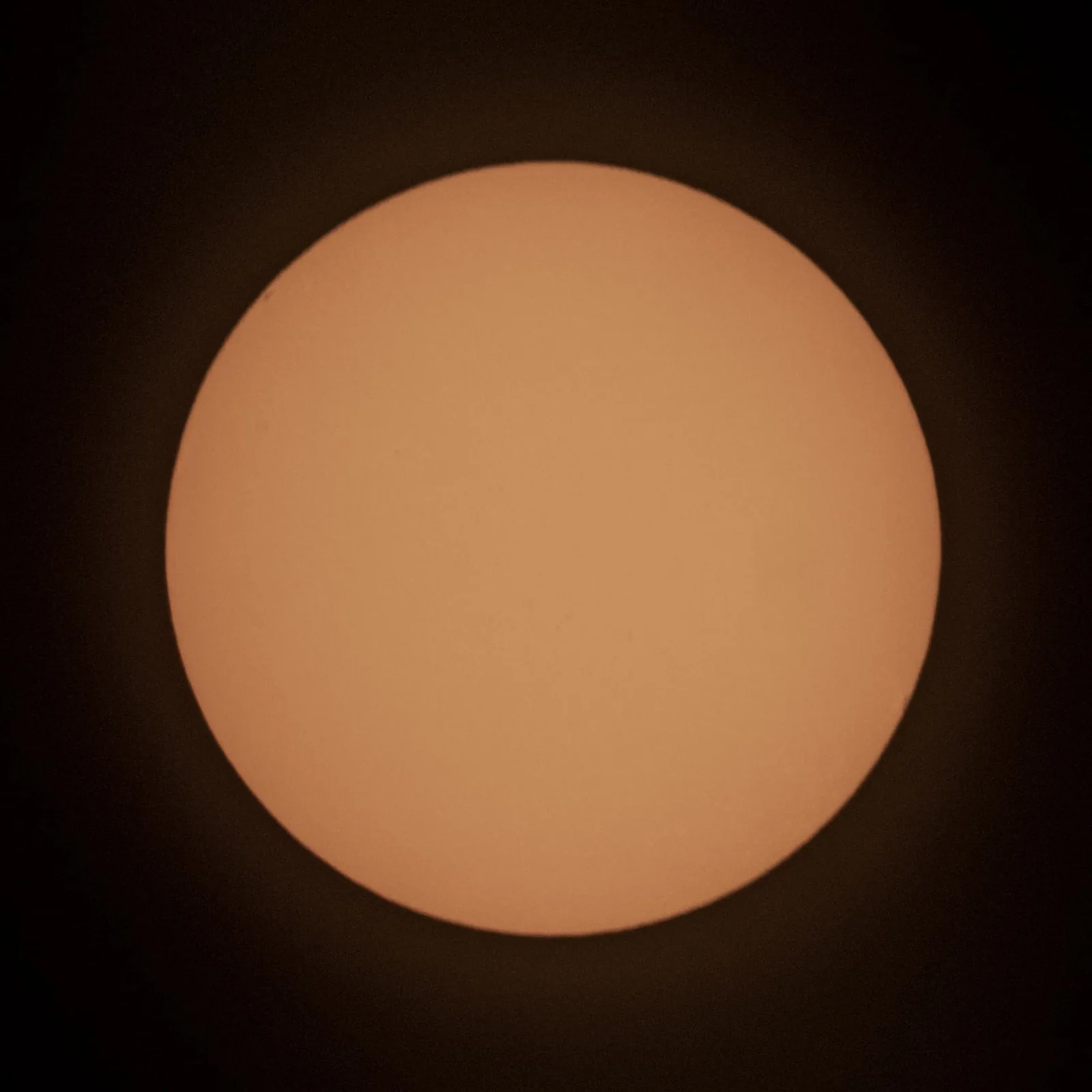
The first test
No eclipse yet. No spectacular prominences. No corona.
Just the sun.
And that was exactly the point.
The first test confirmed that the filter sits securely and reliably reduces the sunlight.
Weeks before the actual eclipse, exposure, sharpness and handling could already be verified under real conditions.
Conclusion
The actual eclipse will last only a few minutes.
The preparation for it takes many hours. Perhaps even weeks.
For me, that is precisely where the fascination of photography lies.
The finished image is not created the moment the shutter is pressed.
It is created while planning. While testing. While discarding. While rebuilding.
And sometimes on a simple workbench — with two PVC panels, a piece of solar filter foil and the wish to be perfectly prepared for a truly unique moment.
Because every story begins long before the first photograph.
Technical data
Camera — Nikon Z9
Lens — NIKKOR Z 150–600 mm f/5.6–6.3 VR
Teleconverter — Nikon Z TC-2.0x
Effective focal length — 300–1200 mm
Filter — Absolute Eclipse Solar Filter Sheet (OD ≥ 5.6)
Filter holder — Custom build from PVC panels and Tesa Powerstrips
Continue exploring
Executive Stories
Beyond Stories
Journal
About Peter Scholz
Extraordinary images rarely happen by chance. In Behind the Lens I share the thoughts, decisions and preparations behind my photographic projects — long before the actual photograph is taken.
Because every story begins long before the first photograph.