Michelberg is usually a fairly quiet place.
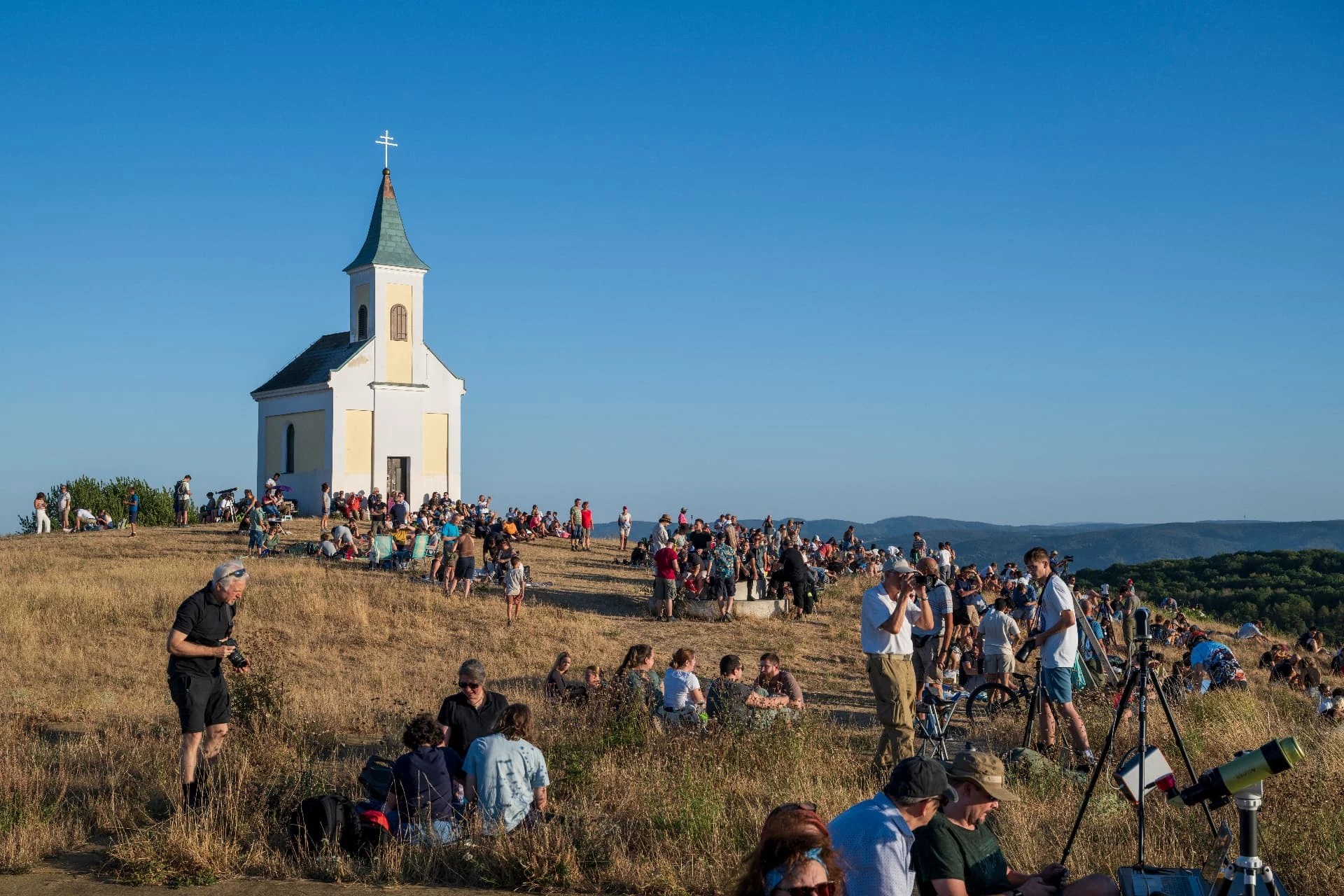
It is a short journey from Vienna, yet once you reach the hilltop, you already feel you are in the Weinviertel. Around the small chapel there are mostly meadows, sky and a view that stretches surprisingly far on clear days. I have been here many times, usually in the late afternoon or at night. Michelberg is one of my favourite places near Vienna for astrophotography, but I am just as happy to come for the sunsets.
On 12 August 2026, however, little of that familiar quiet remained.
Even on the drive up, it became clear that I had not been the only one with this idea. Around the chapel, people sat on blankets and camping chairs, with cameras and telescopes between them. More people kept arriving. I had seen Michelberg in many different moods, but never anywhere near this crowded.
And yet it felt right.
Because that evening, everyone was waiting for the same thing.
409 Metres Above the Weinviertel
Michelberg lies near Haselbach, in the municipality of Niederhollabrunn in the Korneuburg district. At 409 metres, it is the highest point in the Rohrwald and part of the Waschberg zone. At first, that may not sound spectacular. But anyone who has stood on its summit soon understands why this hill has drawn people for centuries.
Its open position makes the difference. The view reaches far beyond the Weinviertel, as far as Vienna and the Alps when visibility is good. Towards evening in particular, the place takes on a special quality: the landscape slowly darkens while the sky lingers above it.
Michelberg's history also reaches far back. Archaeological finds show that it was inhabited in prehistoric times; towards the end of the Early Bronze Age, a system of ramparts and ditches occupied the hilltop. Later, it became a religious site. A place of worship is said to have stood here as early as around the year 1000, and in the eighteenth century Michelberg developed into a pilgrimage destination. The present Michaelskapelle dates from 1866–67.
You do not need to know any of that to enjoy the place.
I like it mainly because, up here, very little stands between you and the sky.
And that was exactly what this evening was about.
19:20
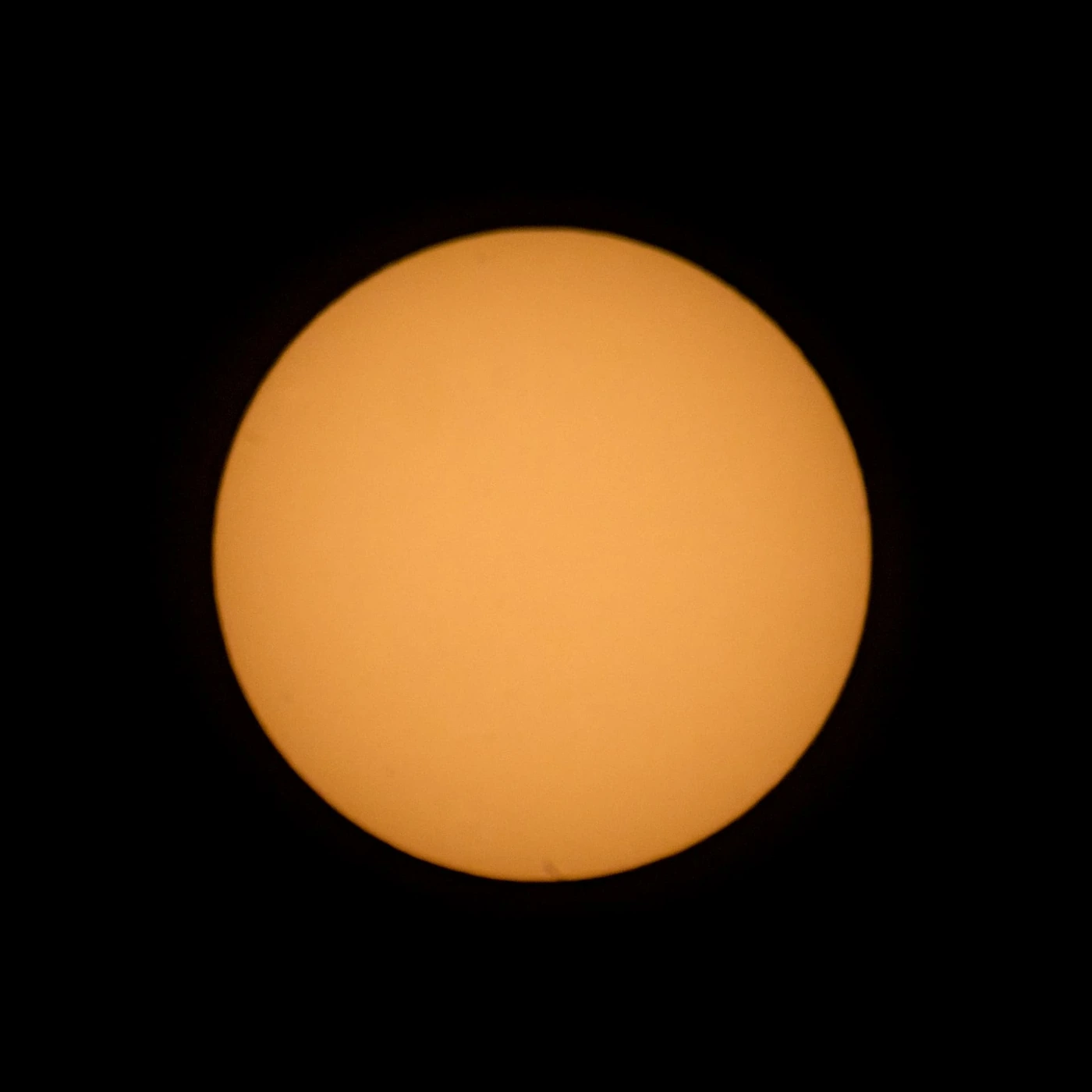
Through the long telephoto lens, the sun initially looked much as it did on other evenings: an almost perfect orange disc against a black background.
The first photograph in what would become my series was taken at 19:20.
Four minutes later, the right-hand edge revealed the first sign of why we had all come.
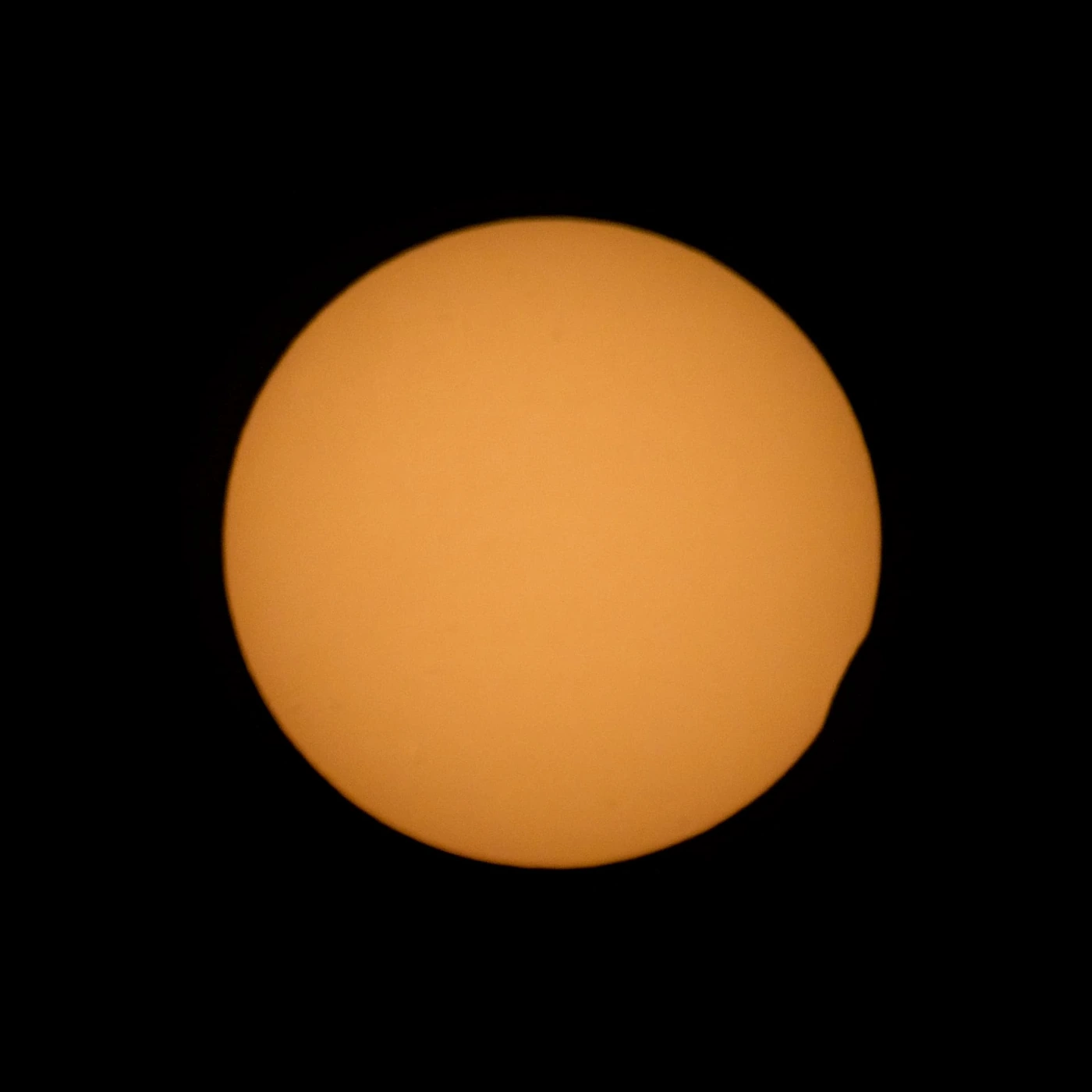
The moon began to move across the sun.
What started as a small notch became more pronounced with each photograph. By 19:27, the change was clearly visible; by 19:31, a substantial part of the solar disc was missing.
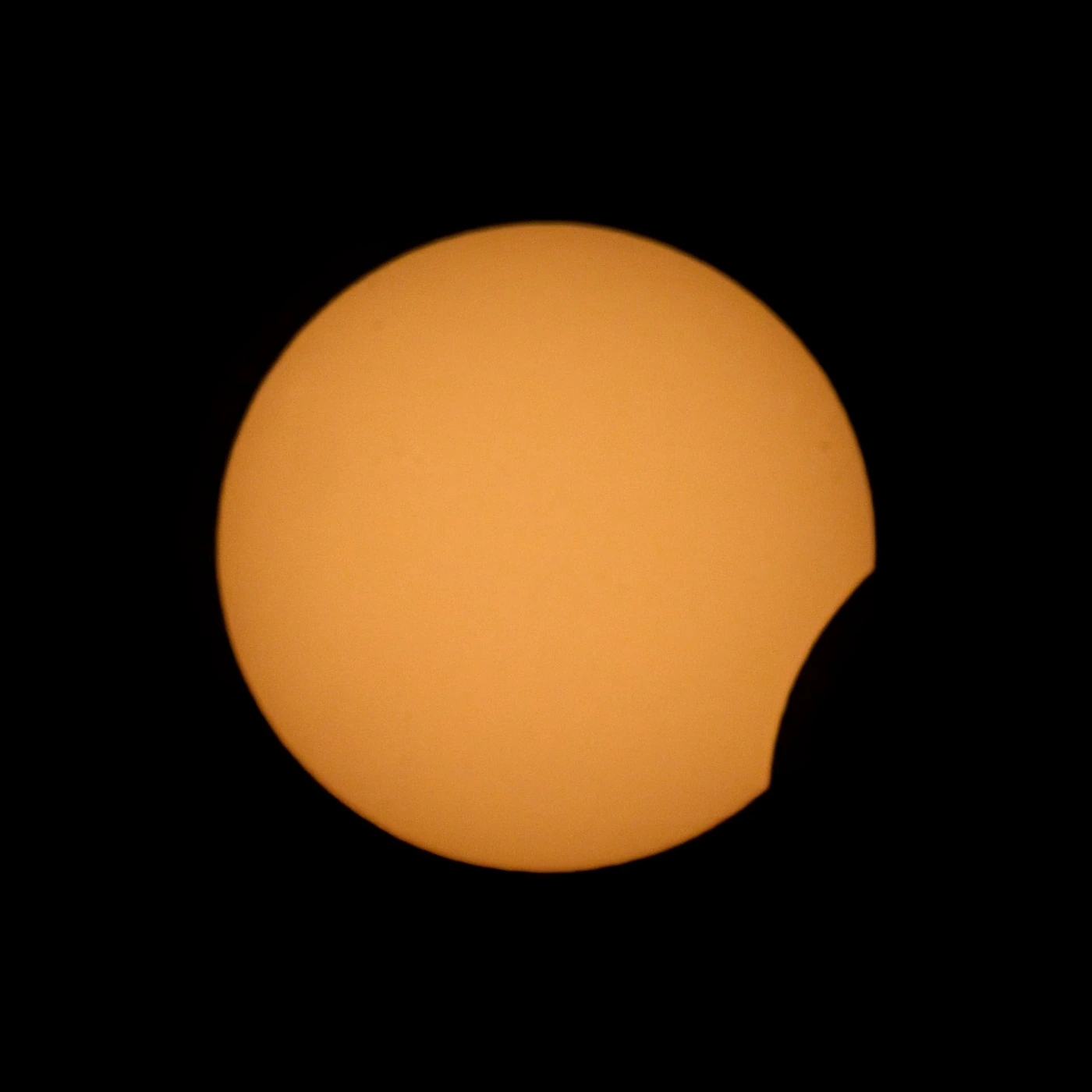
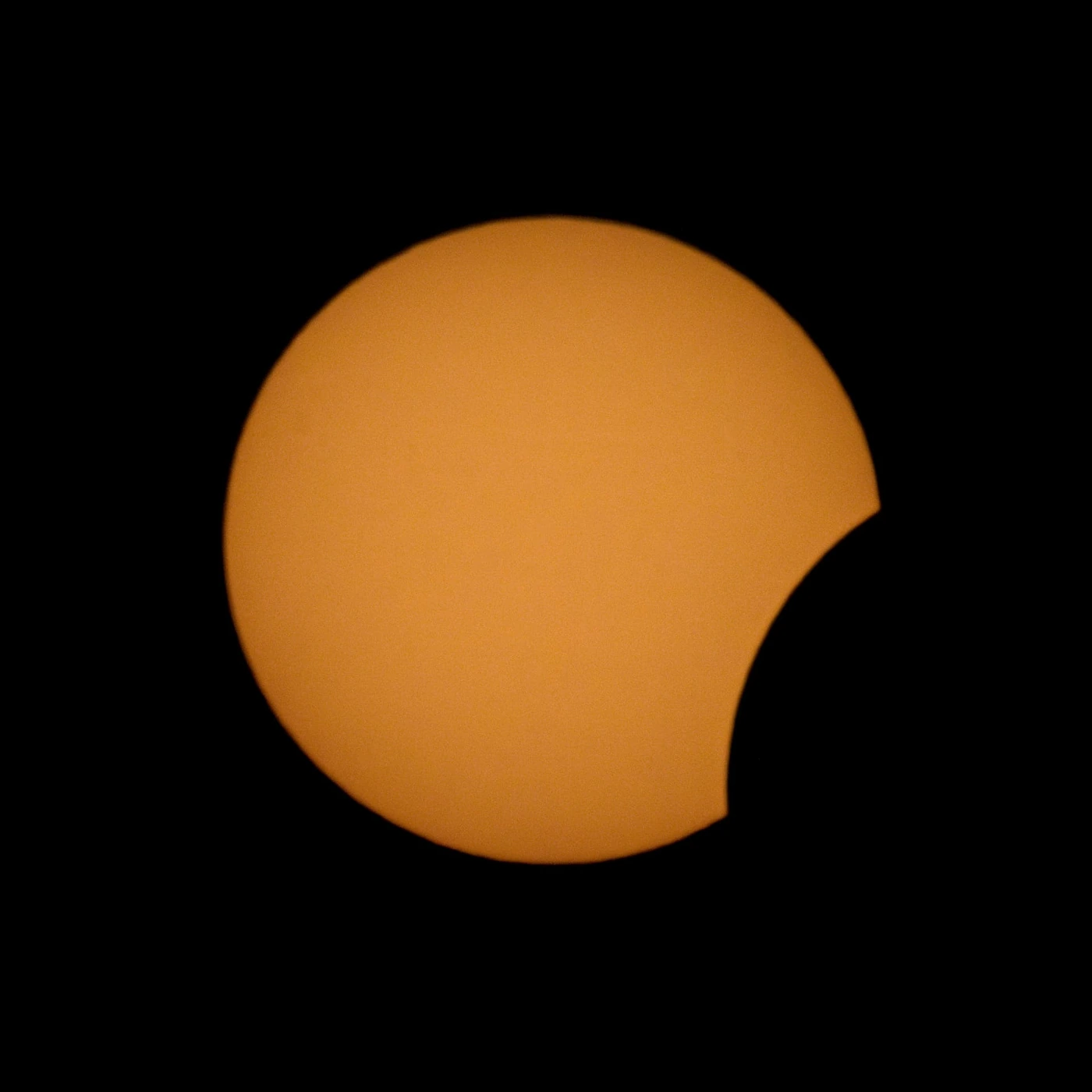
What fascinated me was that two movements were happening at once. The moon was moving farther across the sun, while the sun itself was slowly approaching the horizon.
So it was not only its shape that changed, but its colour too.
19:35–19:51
I continued photographing at intervals of a few minutes.
Something emerged that I did not fully notice while I was taking the photographs. The orange disc slowly became an abstract form. At first, only a piece was missing, then almost half. At the same time, the orange grew steadily darker.
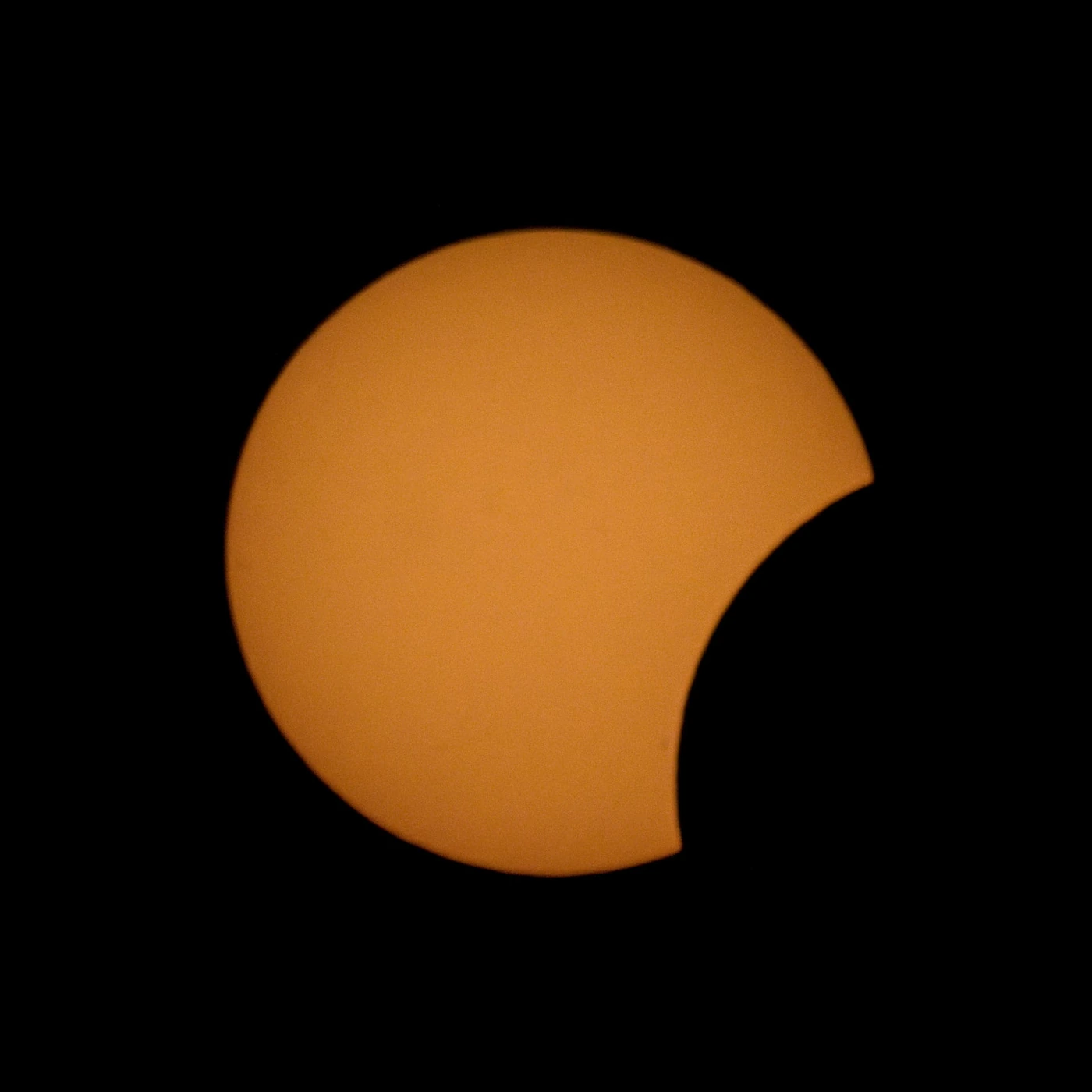
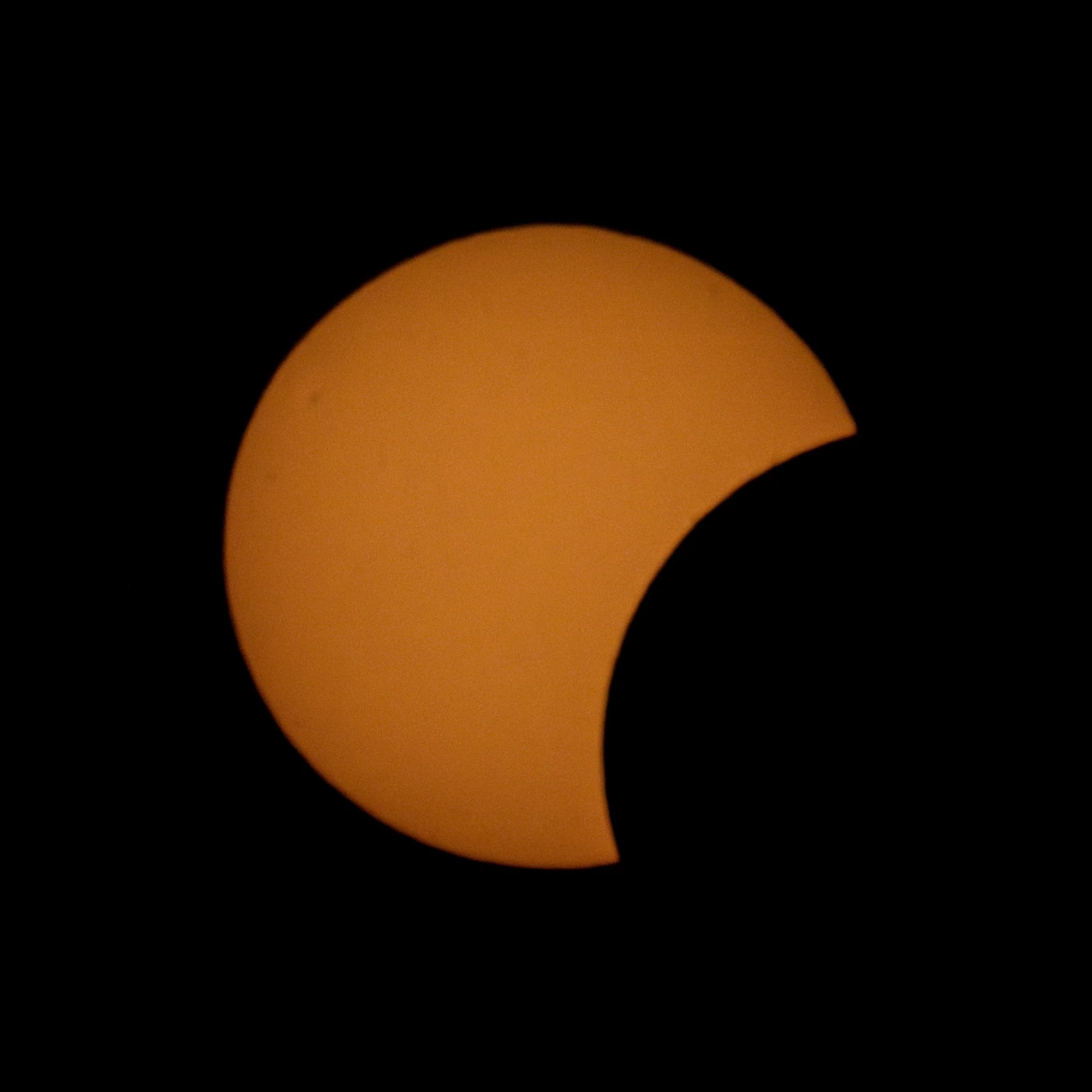
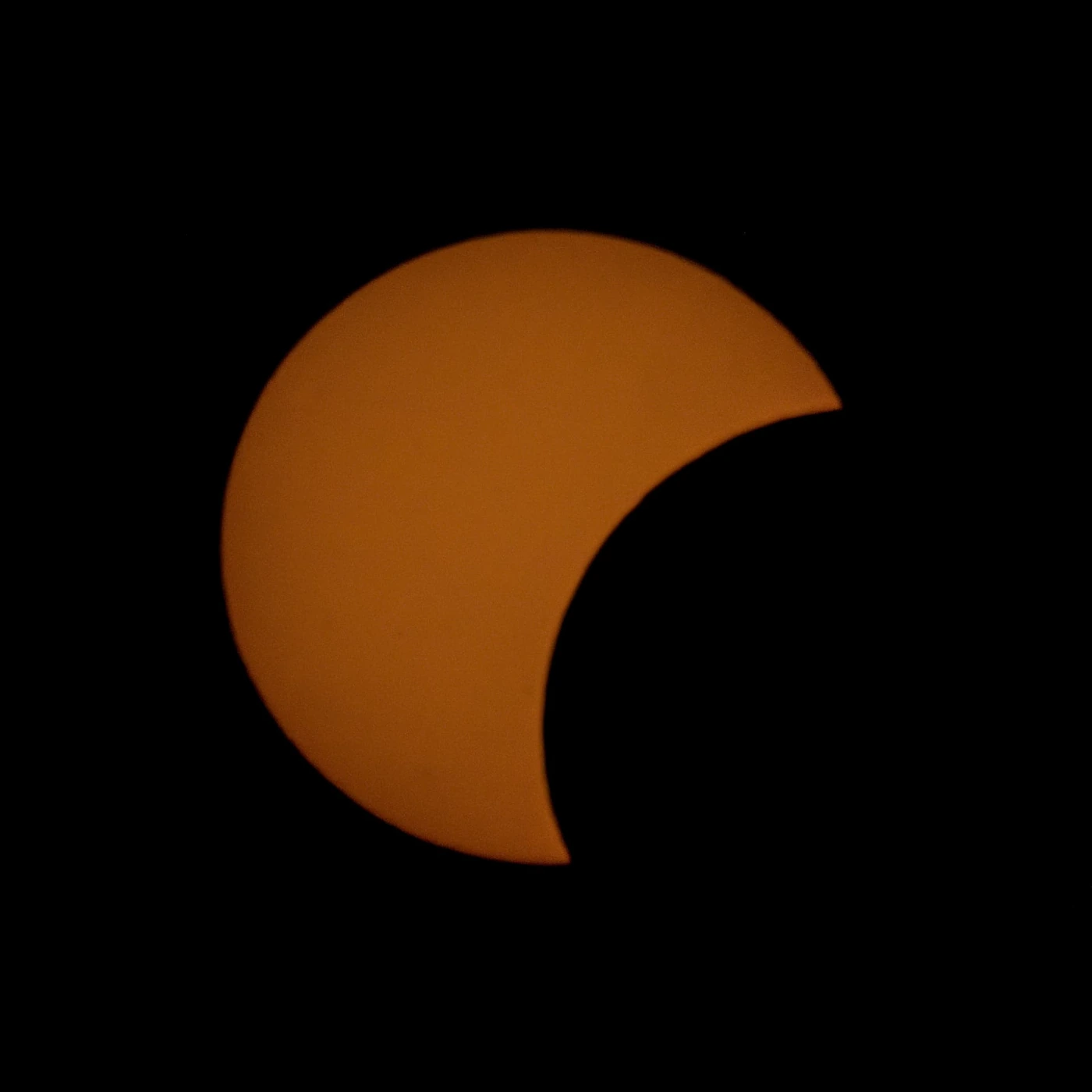
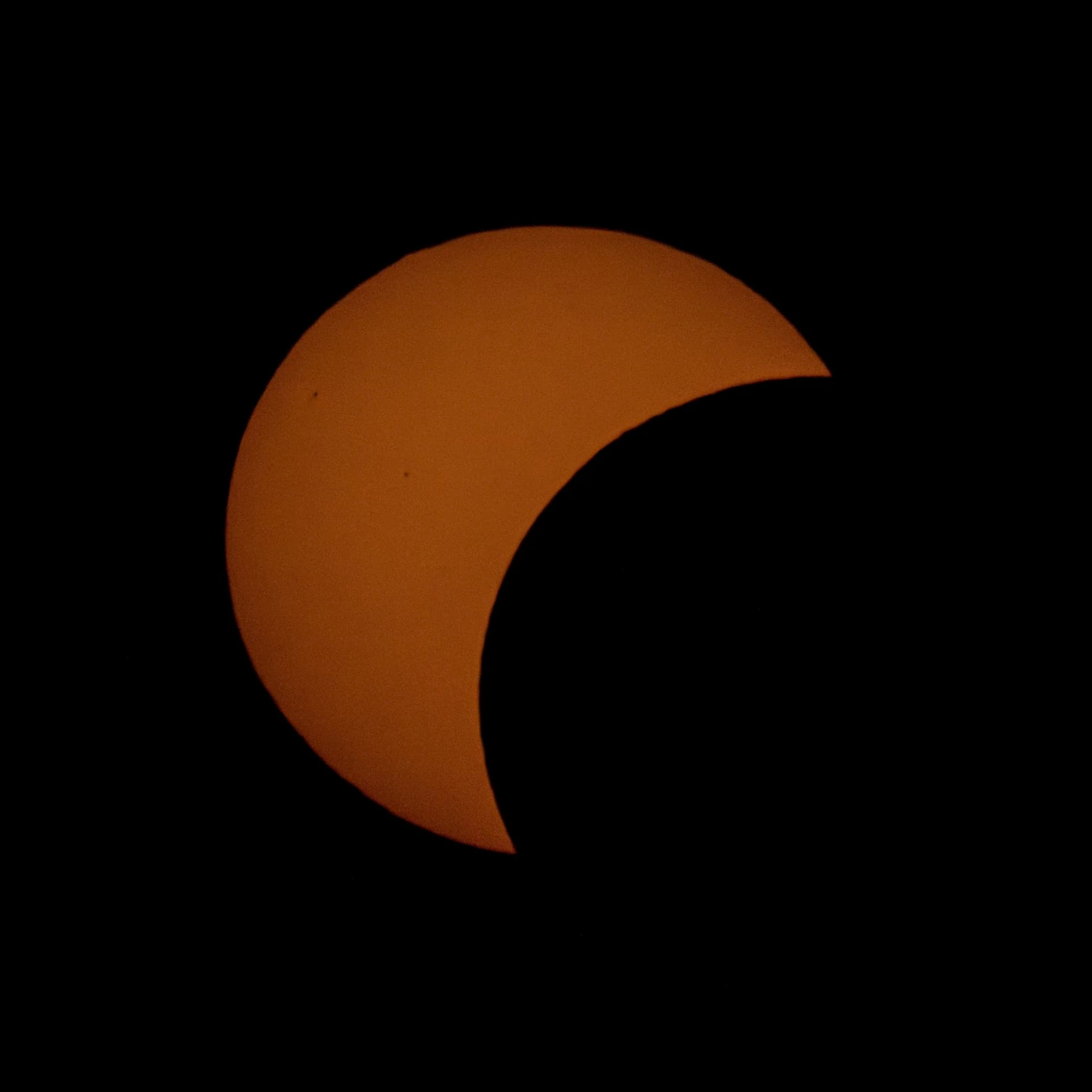
By 19:51, there was scarcely anything left to remind me of the sun I had photographed half an hour earlier.
The same camera was still standing in the same place in front of me. Through the viewfinder, the world now looked entirely different.
The Last Ten Minutes
By around 20:00, only a narrow crescent remained.
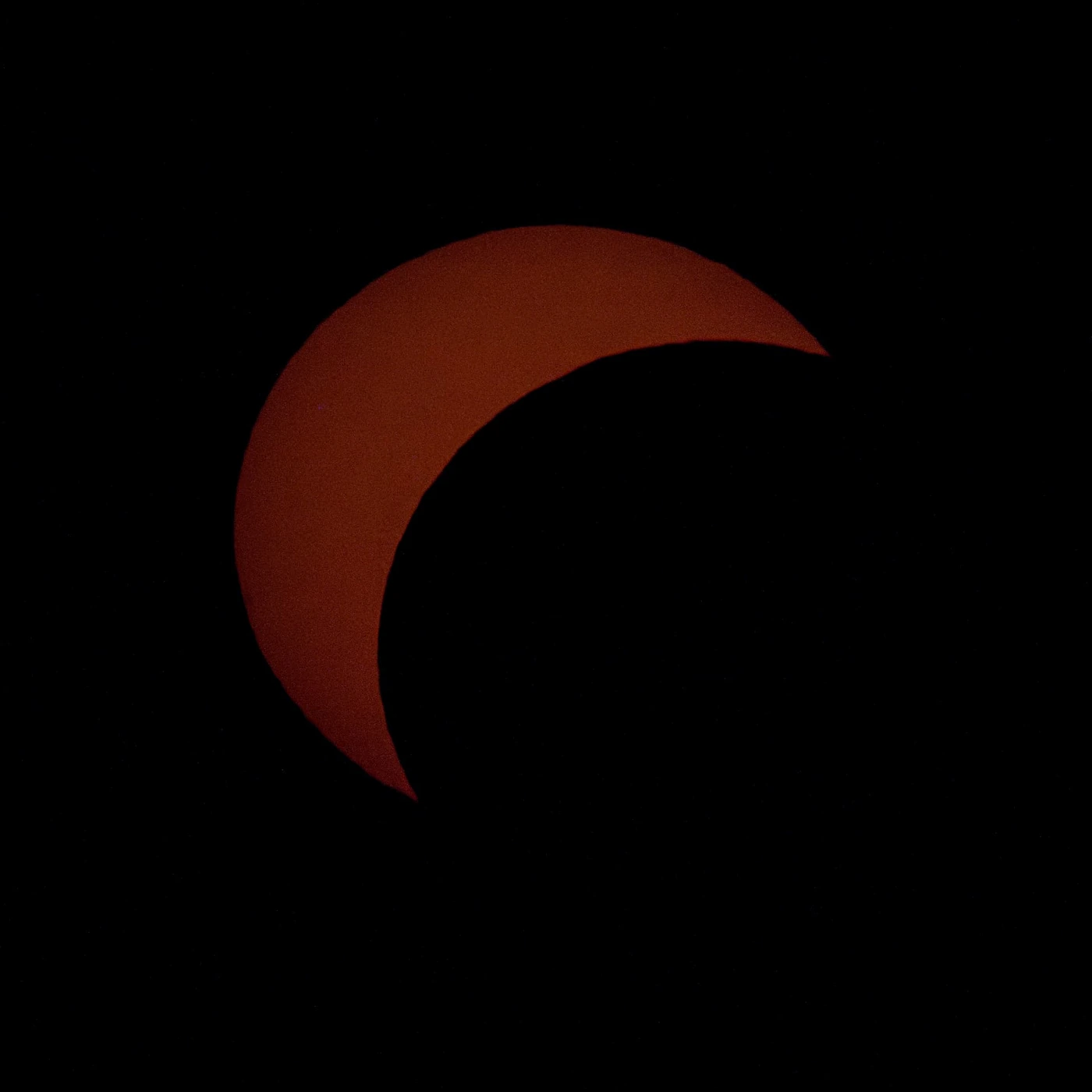
As the sun drew closer to the horizon, the atmosphere made its presence increasingly felt. The light lost its orange hue and turned deep red, the outlines softened, and in the final photographs dark shapes appeared in front of the solar crescent.
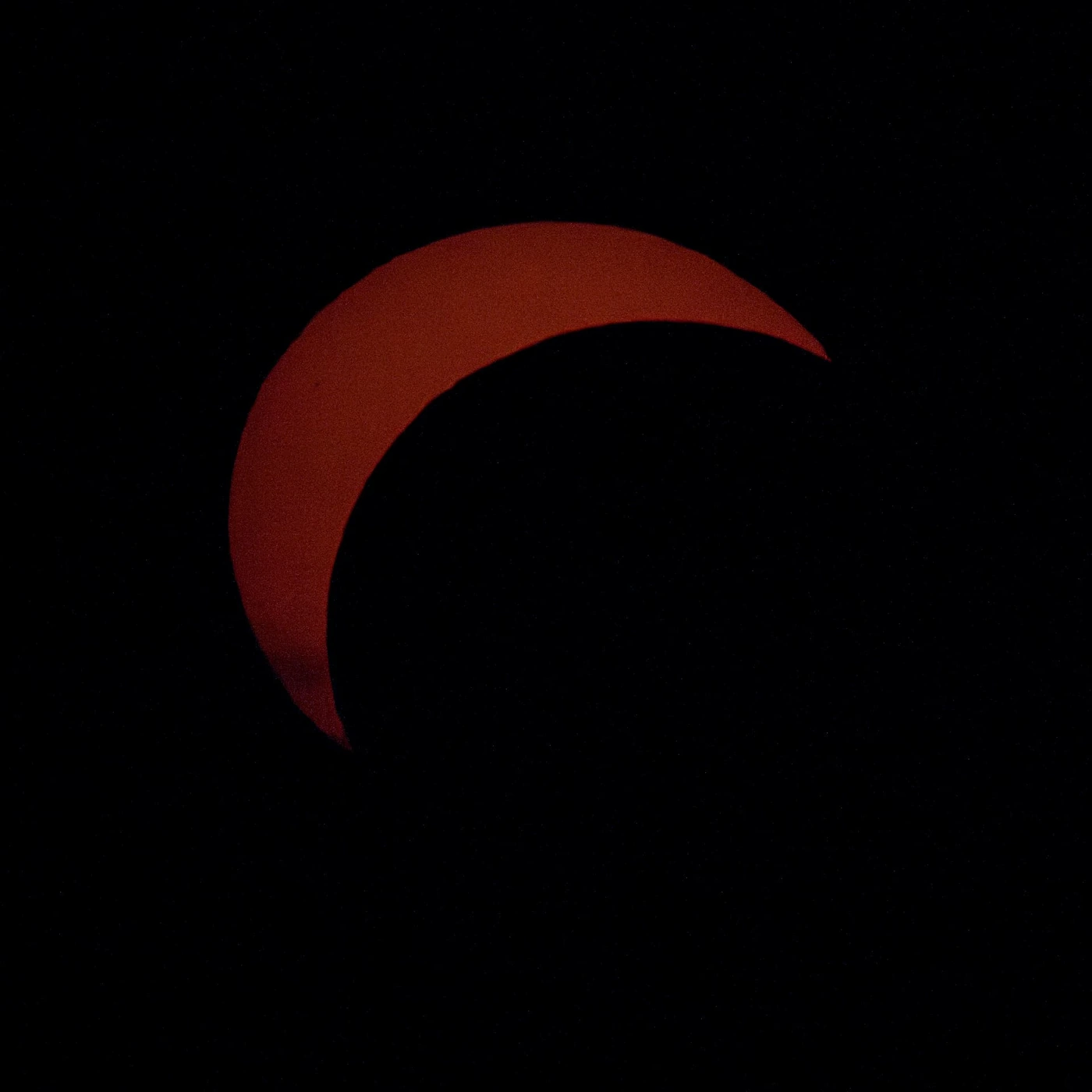
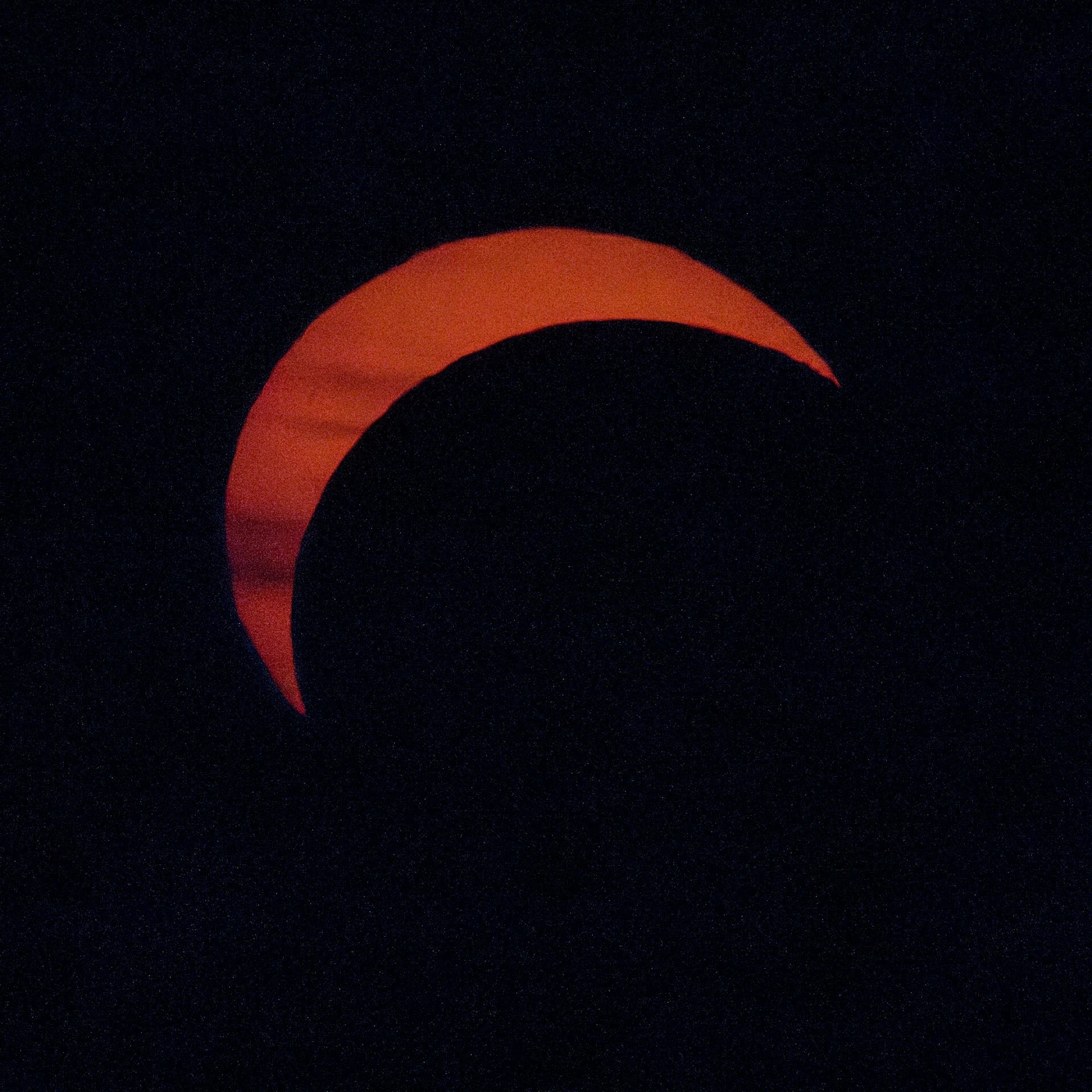
At 20:10, I took my last photograph.
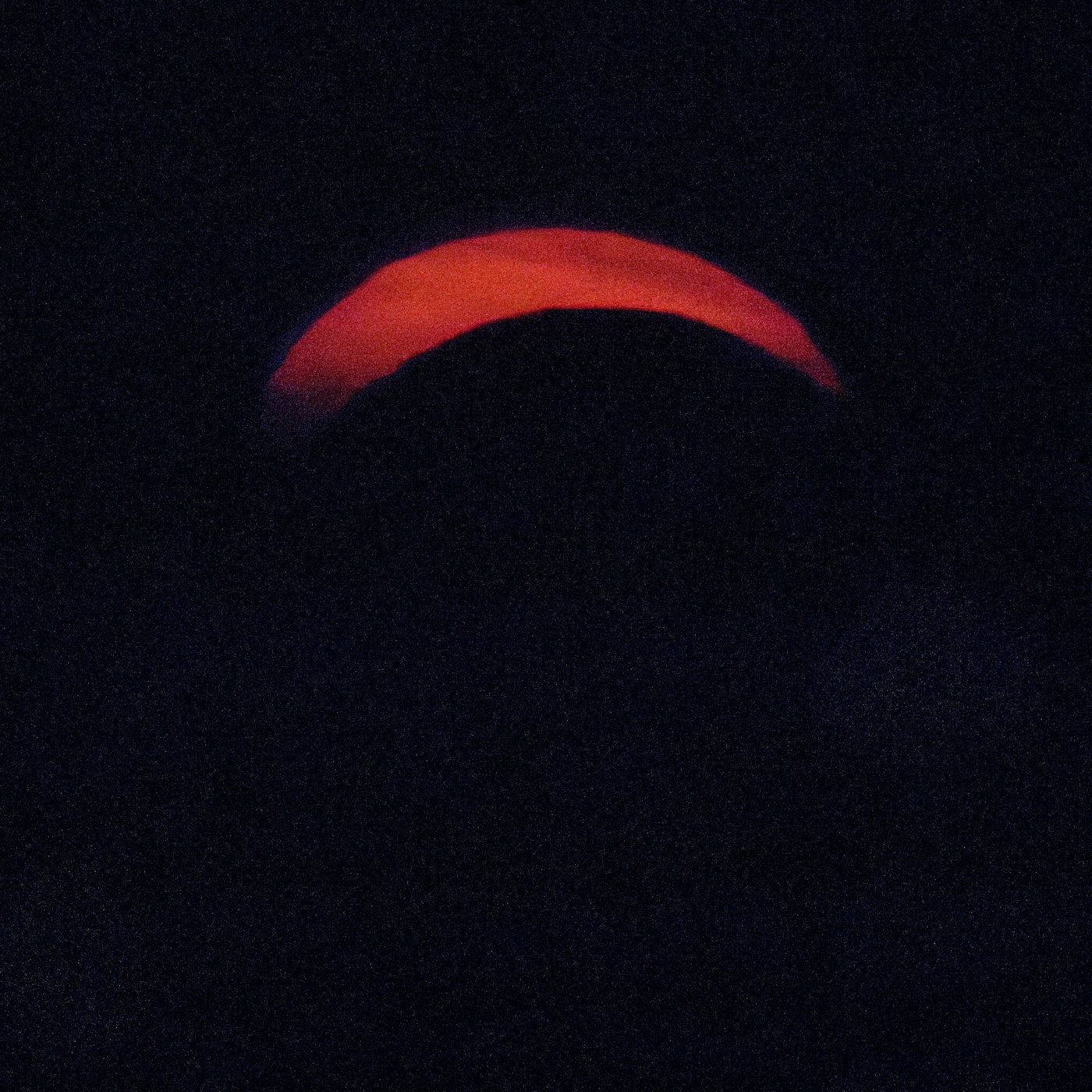
Only a thin red arc remained, just above the horizon.
Then the sun was gone.
And something happened that I had not expected at all.
The people around the chapel began to applaud.
First a few, then more and more.
After almost an hour in which hundreds of people had looked in the same direction together, the setting sun received a round of applause.
I stood behind my camera and had to laugh.
It gave me goosebumps.
50 Minutes on Michelberg
Later, I brought twelve photographs from that evening together into a series.
The first was taken at 19:20, the last at 20:10. Just fifty minutes lie between them.
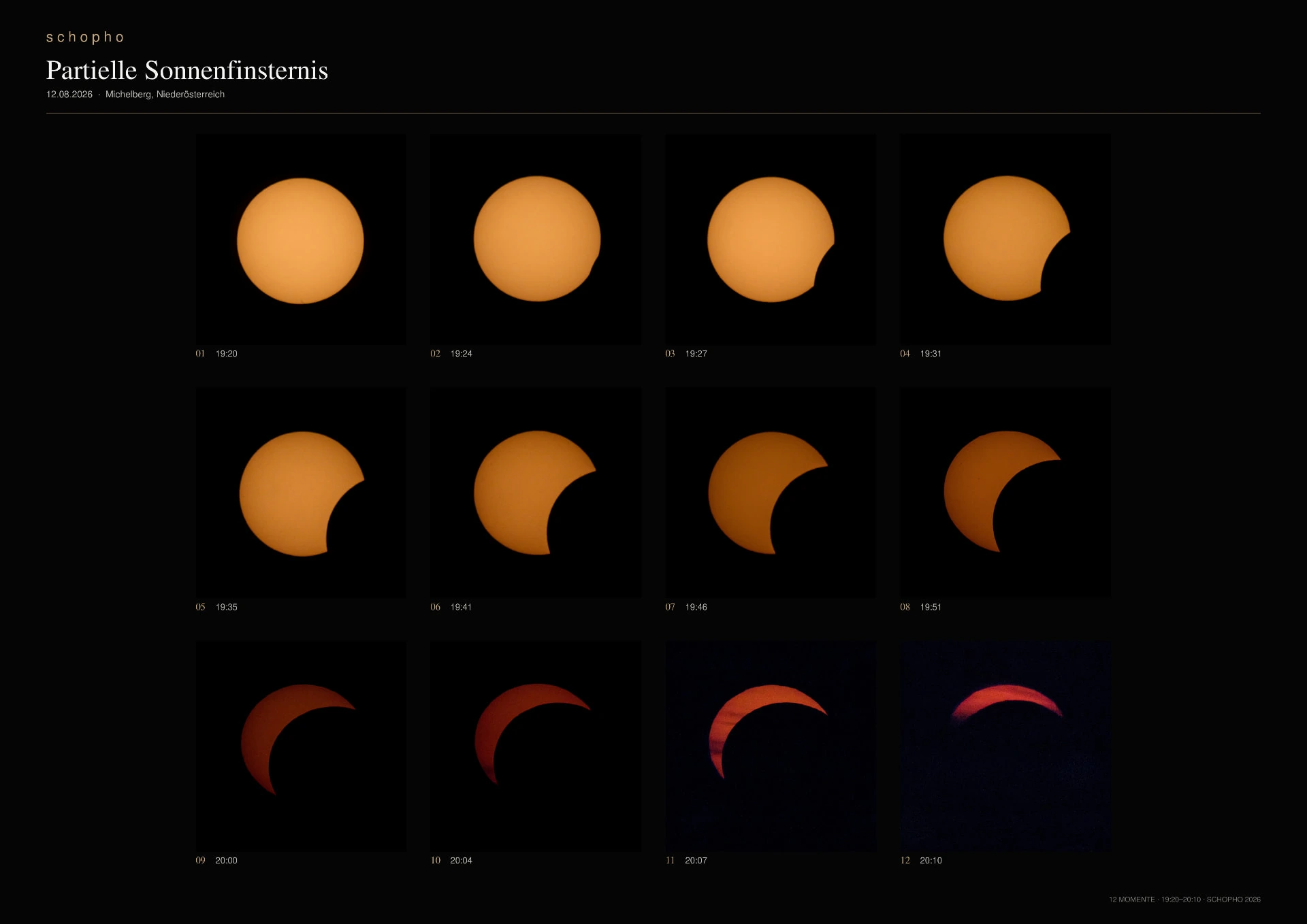
Looking at the series today, what I like is less any individual photograph than what only becomes visible through all twelve together.
You see the moon moving across the sun. You see the light becoming warmer and darker. And finally, all that remains of an almost complete solar disc is a narrow red arc.
Fifty minutes in a single image.
Perhaps I also like the series because it captures so precisely why I enjoy coming to Michelberg.
I have been here on nights when hardly anyone was around. I have photographed stars here and watched sunsets with only a handful of other people looking on.
On 12 August, it was the exact opposite. The hill was full of people.
And this particular evening reminded me once again why I like this place so much.
Not because something spectacular happens here every time.
But because, when it does, you have a damn good seat up here.
Partial solar eclipse
Michelberg · Lower Austria
12 August 2026 · 19:20–20:10
Photography & Story · Peter Scholz · SCHOPHO
Further Information
Historical and geographical details about Michelberg are based on publicly available information from the municipality of Niederhollabrunn.