Not five minutes earlier you are still walking along the Donauinsel like anyone else. Cyclists, runners, people out for a stroll, the Danube, the city.
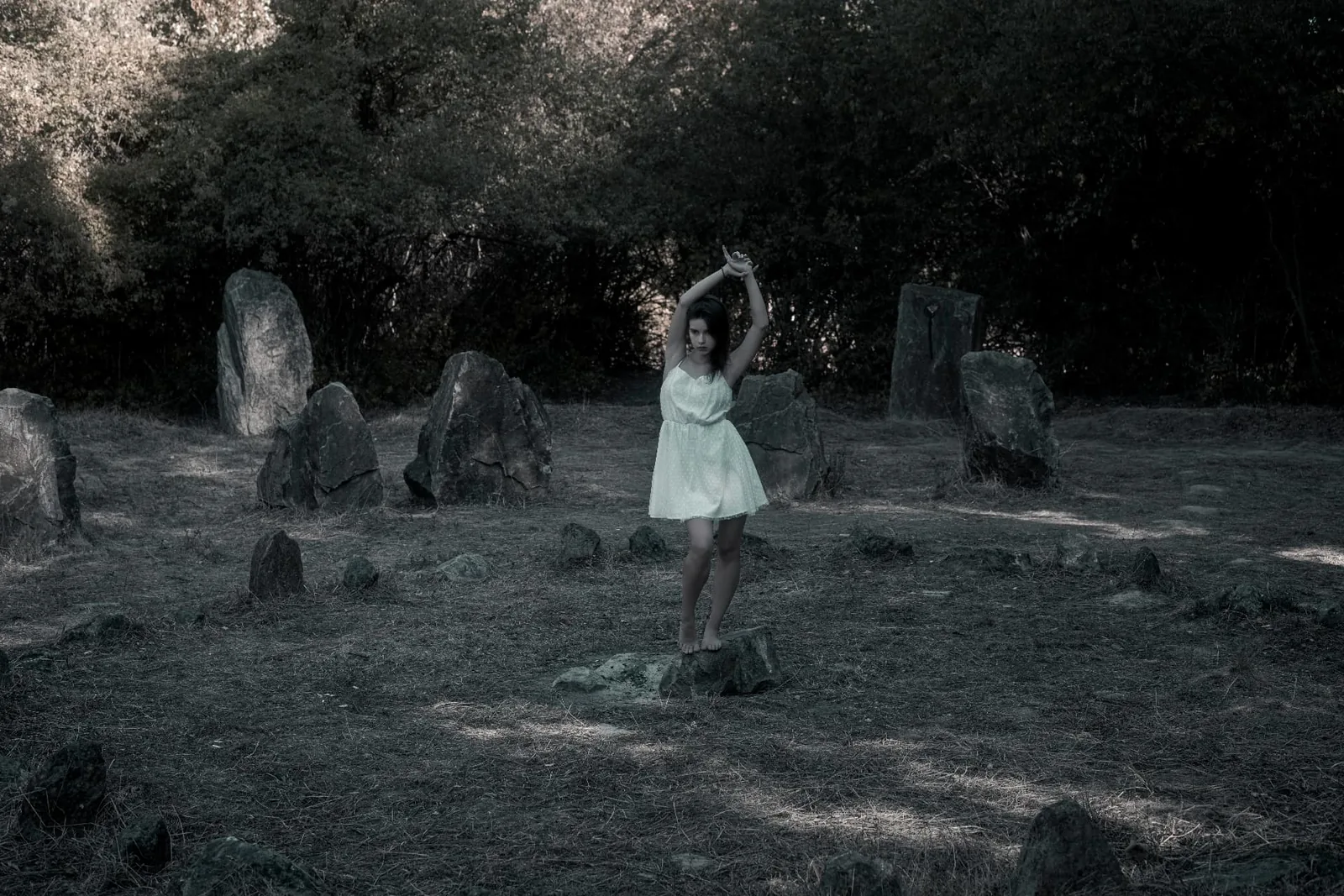
Then you take a few steps in between the trees and stand in front of a stone circle.
Large stones, some of them several metres high, stand in a small grove. In the centre there is a split stone. The light only reaches through the trees in places. Of Vienna, suddenly, there is remarkably little to be seen.
The place is sometimes called “Little Stonehenge”.
And when you stand there for the first time, you understand why.
Except: this Viennese Stonehenge is not particularly old.
The stone circle on the Donauinsel was erected in 1990 by Herbert Wimmer. The arrangement of the stones follows astronomical principles. Solstices and equinoxes can be read from the position of the sun and the placement of the stones.
What interested me first, though, was something else.
I knew the place and had been carrying a thought around for a while: what could one photograph here?
Not as a documentation of the stone circle. And not as an attempt to turn the Donauinsel into a prehistoric ritual site.
But as a photographic series.
That is how BETWEEN STONES came about.
A place that already brings almost enough with it
For the shoot with Tiana we did not need much.
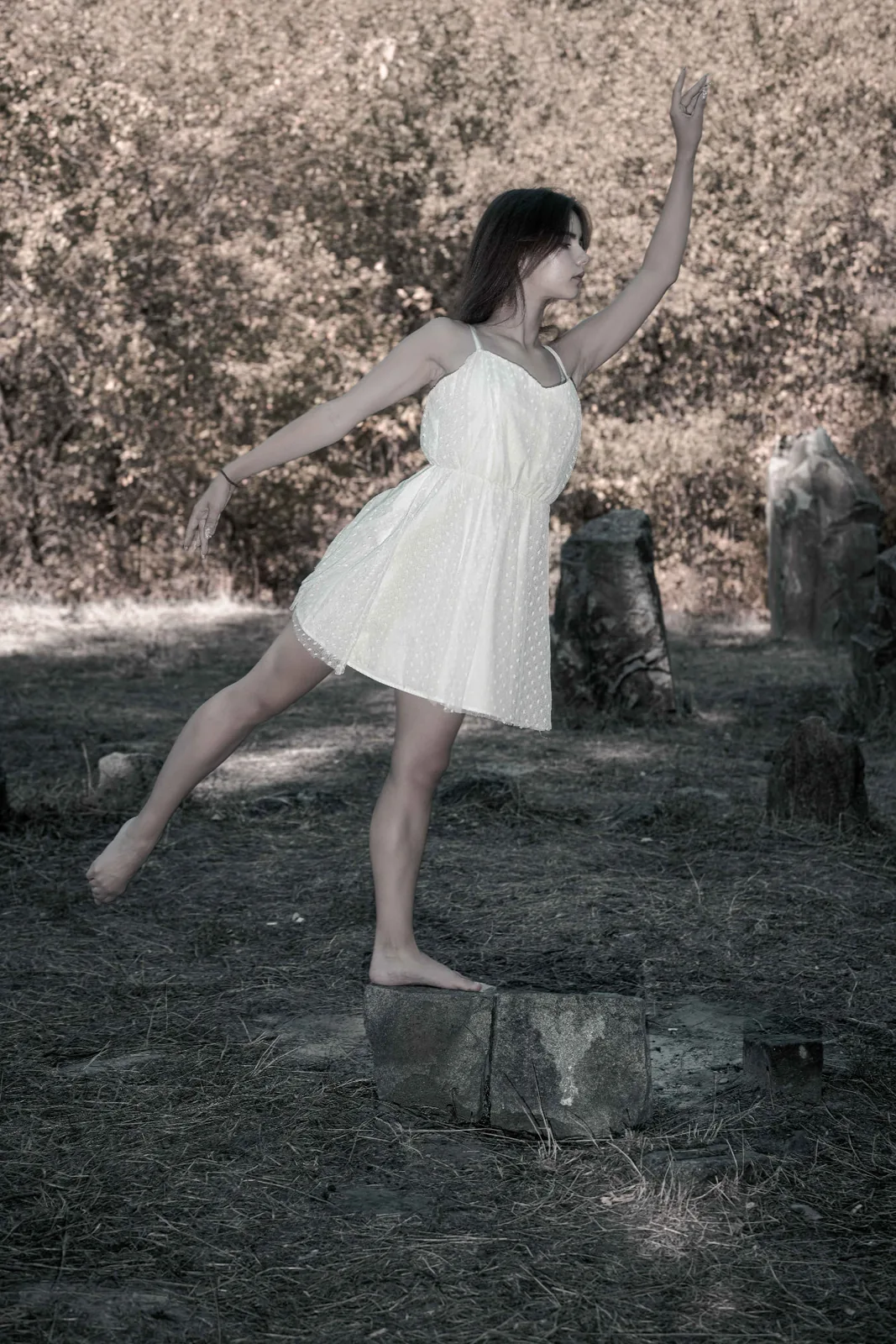
The light dress was a deliberate contrast to the stones, the woodland and the dark green. No historical clothing, no costume and no invented character.
We simply began with the place.
Tiana between the stones, directly in front of them, sitting, standing, in movement. Once with a lot of surroundings in the frame, then again so close that it is barely possible to tell where the photograph was taken.
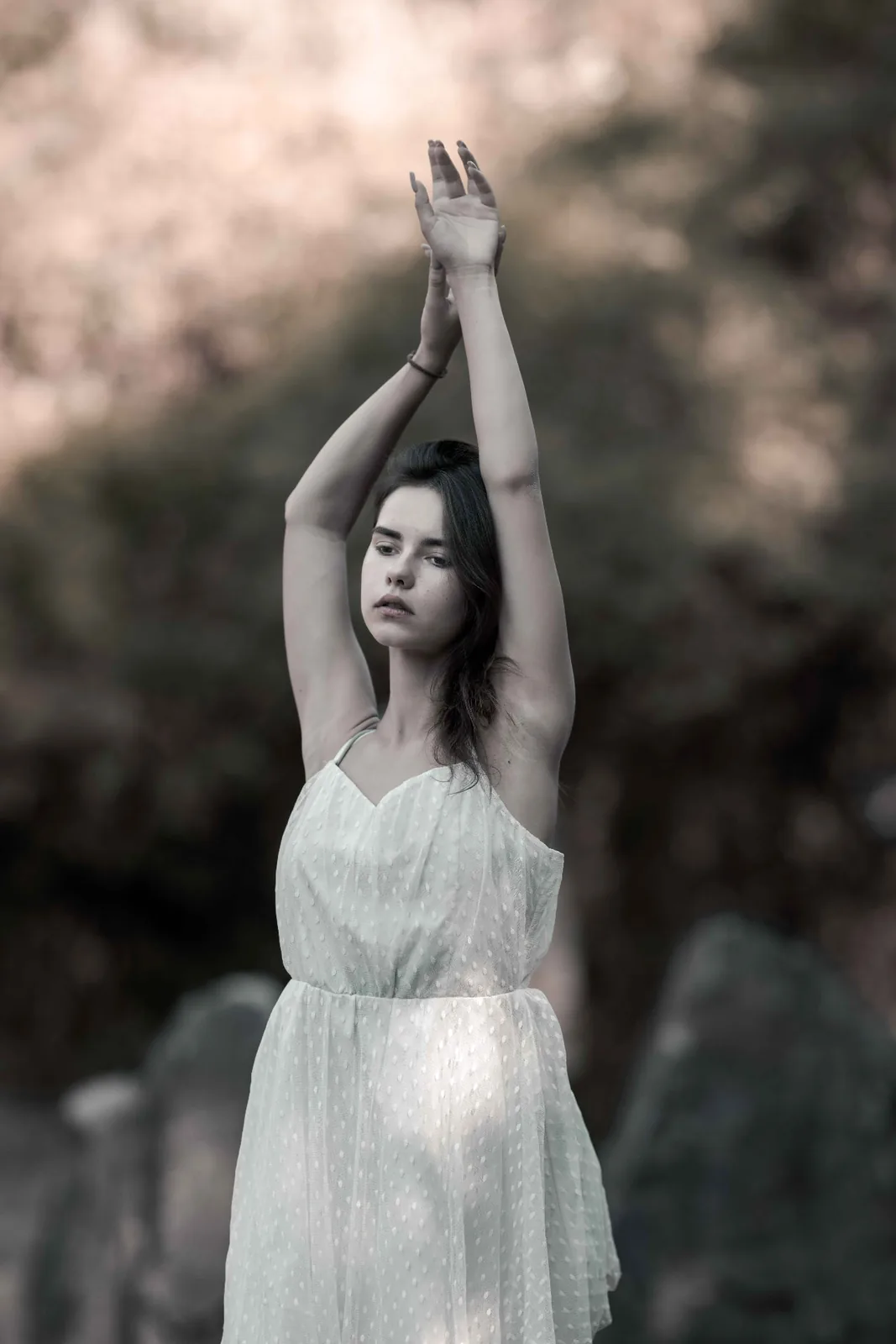
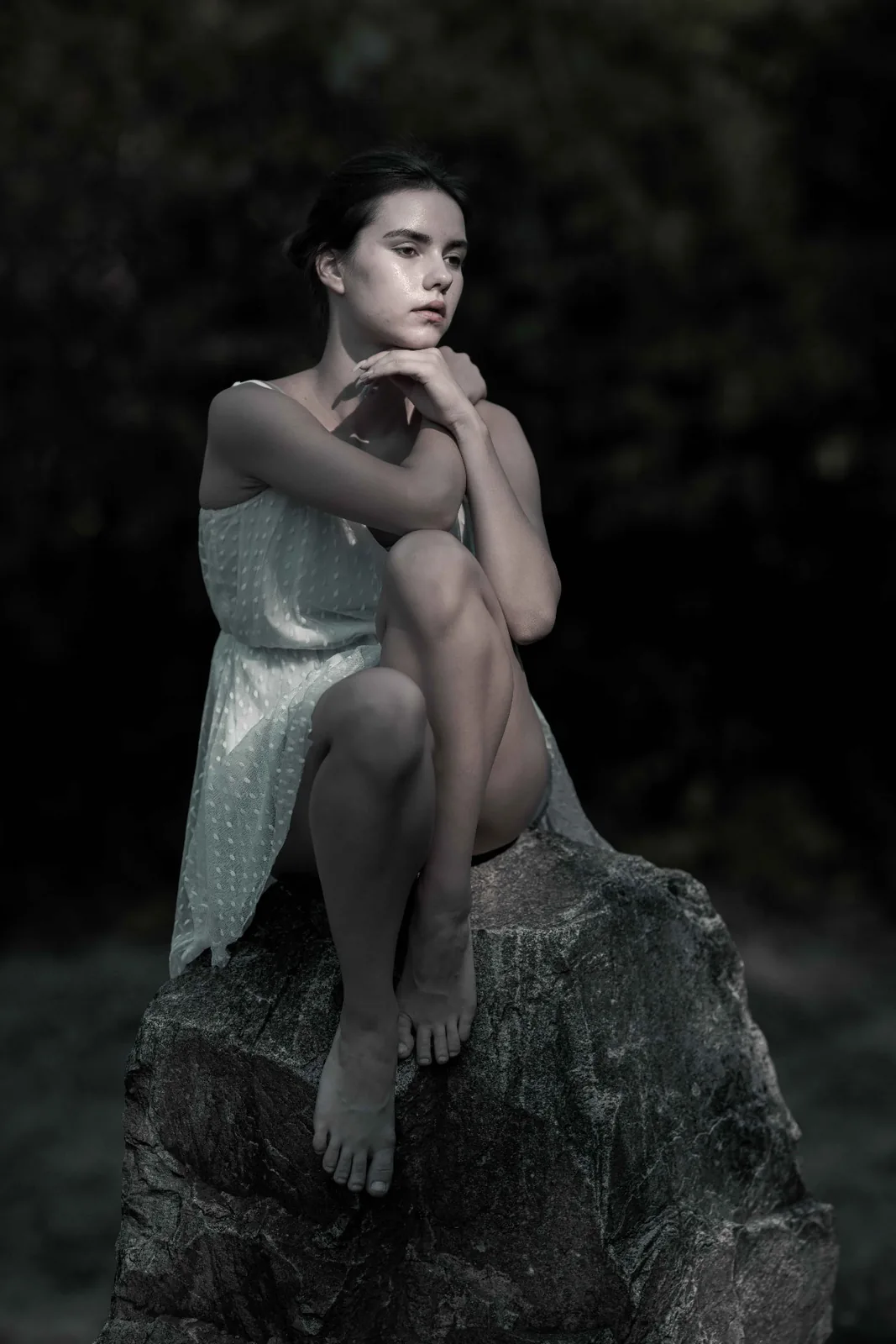
What quickly became apparent was that, photographically, the stone circle is above all interesting because of one element that is easy to underestimate at first glance:
the light.
Between the trees, bright patches and deep shadow alternate within a few metres. One step to the left can be enough and a face lies in darkness. A few metres further on, light falls on skin and dress while the background almost disappears.
That was considerably more interesting than trying to make the place artificially more spectacular.
So that is exactly what we worked with.
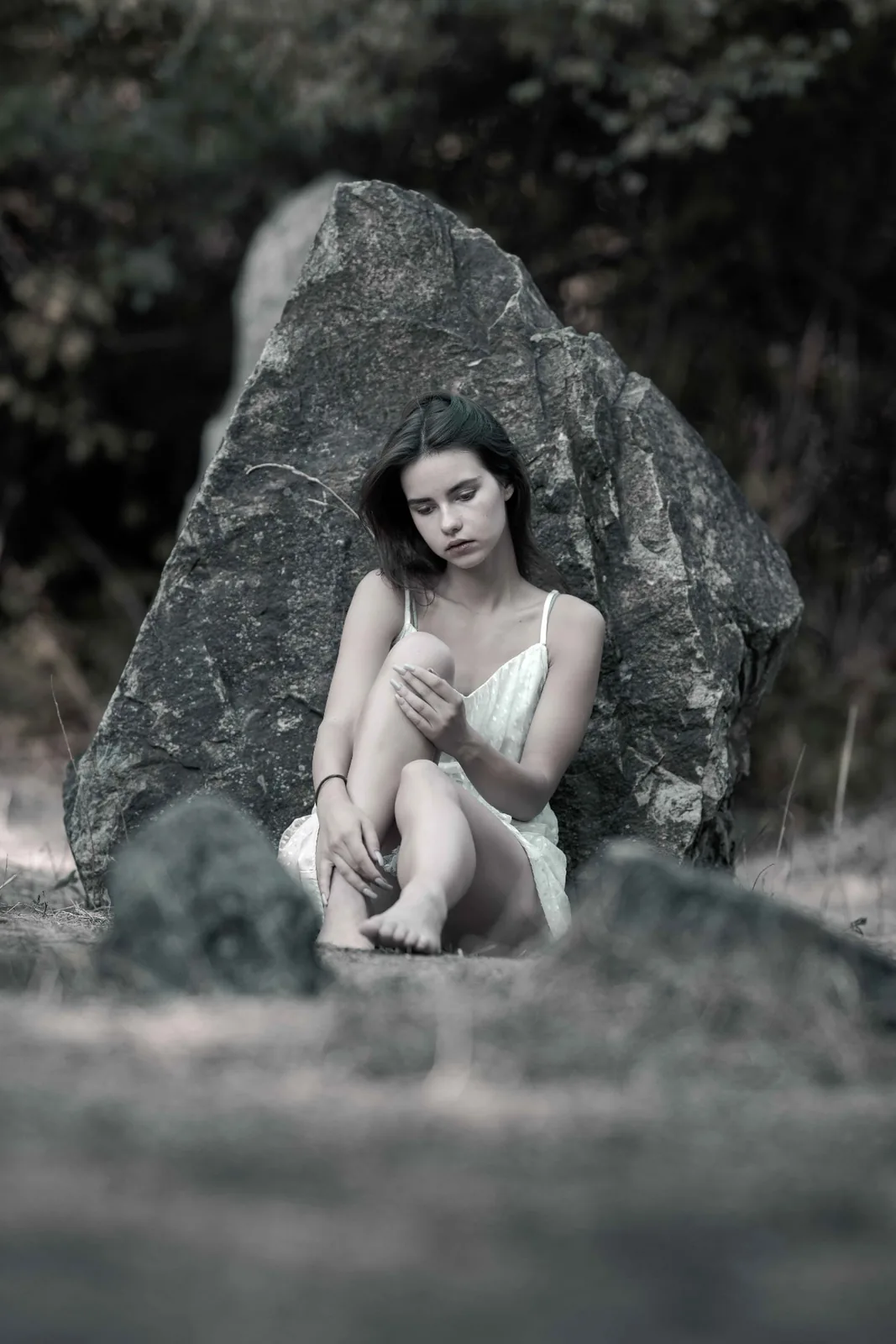
How mystical is it allowed to become?
With a stone circle the temptation is obvious, of course.
Make it darker. Edit it more dramatically. Bring in a little more mystery.
Except this place does not really need that.
The effect already comes from the large stones, the woodland and the light. Added to that is Tiana in a dress that stands clearly apart from its surroundings.
That is why, in the editing as well, we did not try to turn the stone circle into something it is not.
The dark areas were allowed to stay dark. The green was pulled back. The stones were meant to keep their structure, while skin and dress appear lighter and softer.
More was not necessary.
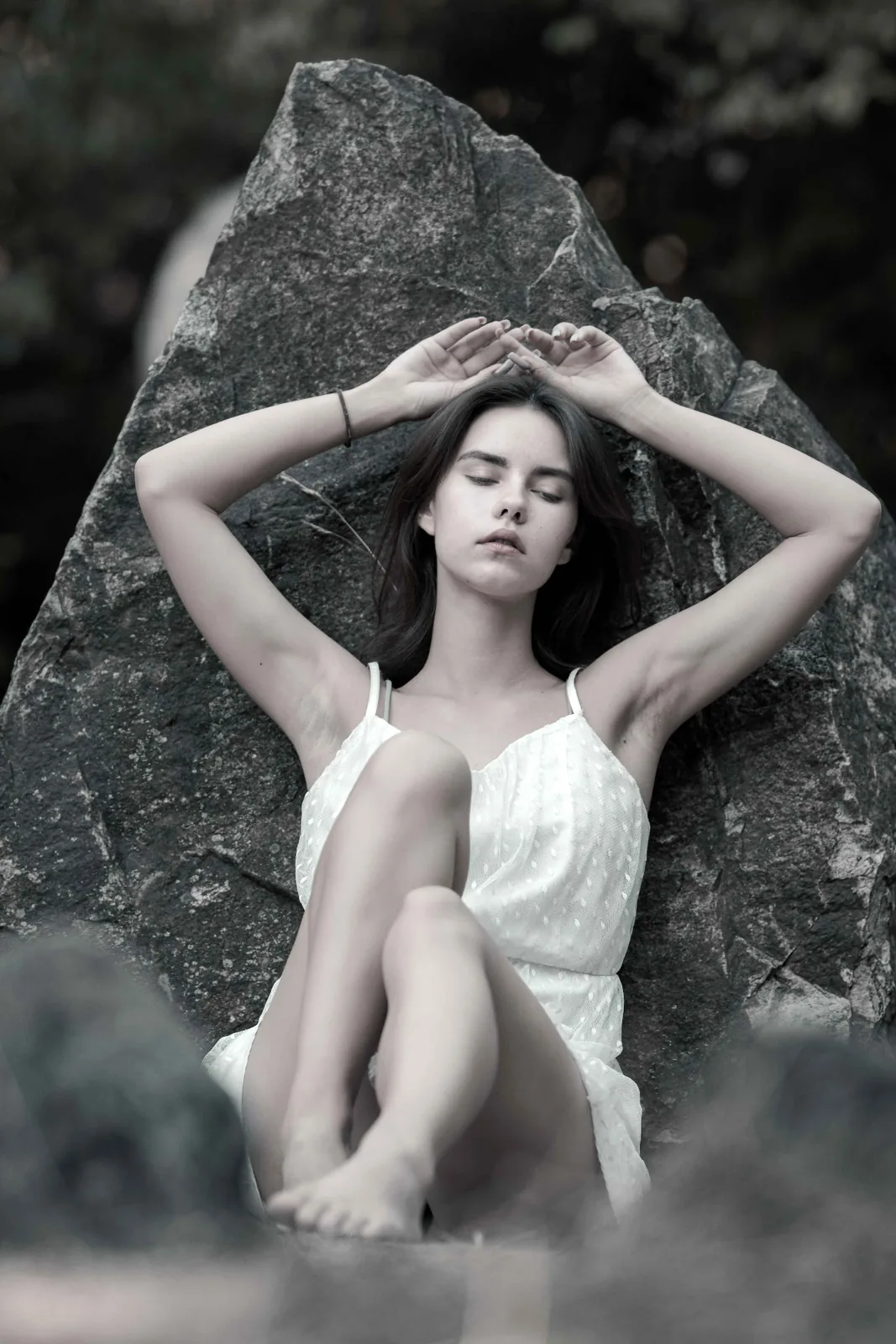
And precisely out of that came very different images.
In some you immediately recognise a person in a stone circle. In others, almost only body, stone and light remain.
All of them were made in the same place.
Some of them only a few metres apart.
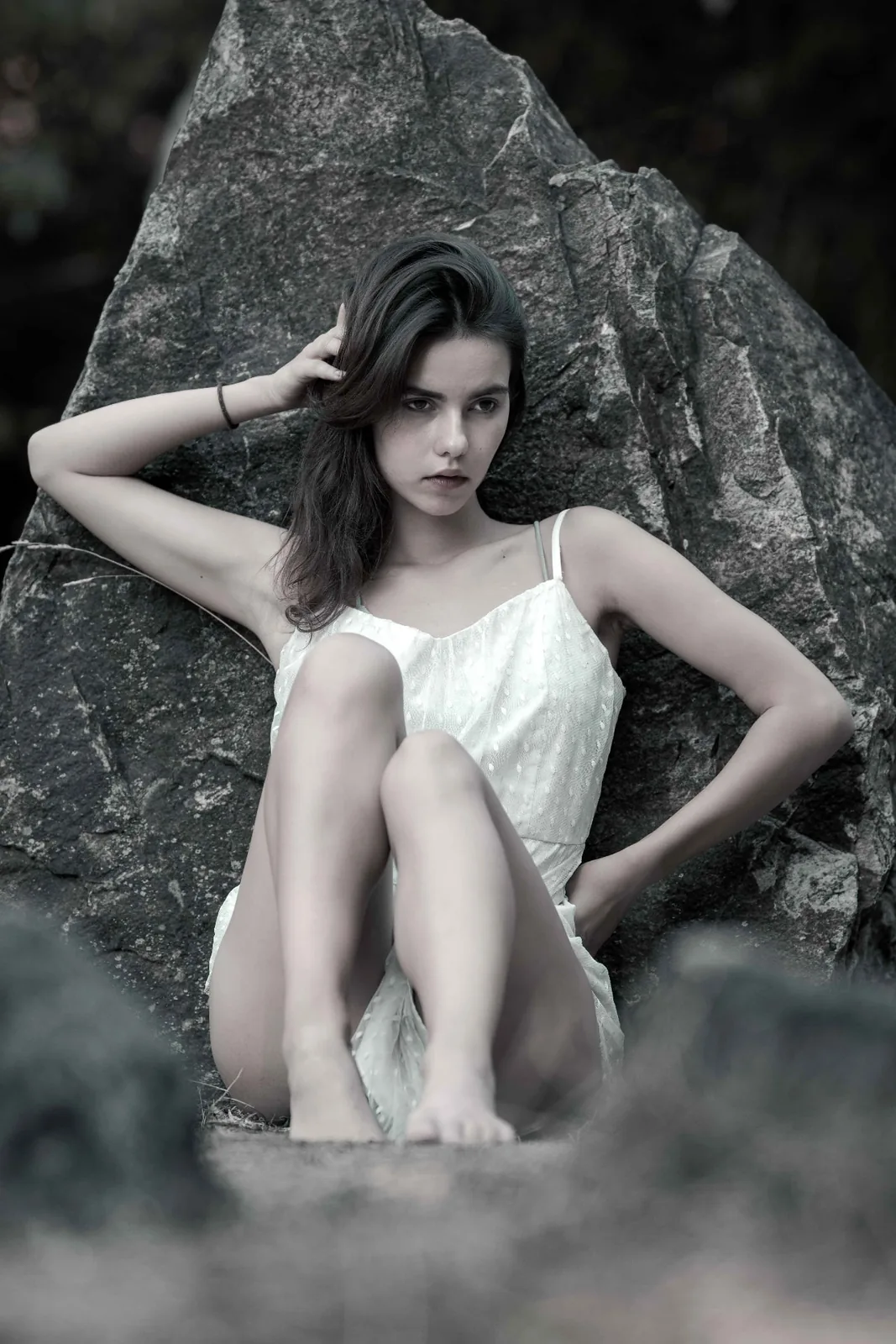
And this is supposed to be Vienna?
That is probably what I like most about BETWEEN STONES.
If you see some of the images without any explanation, the Donauinsel is not necessarily the first thing that comes to mind.
And yet the stone circle lies in the middle of Vienna, in the 22nd district, between the Praterbrücke and the Stadlauer Ostbahnbrücke.
Photographically, we usually associate Vienna with fairly unambiguous images: St. Stephen’s Cathedral, the Ringstraße, Schönbrunn, coffee houses, the city centre.
Rightly so.
But if you live and photograph here, at some point the other side becomes more interesting.
The places you may have already driven or walked past. Spots that do not appear on the first pages of any guidebook. And locations that can suddenly look entirely different in a photograph than the way you perceived them yourself.
The stone circle is one of those places.
You do not have to fly to Iceland for it.
Sometimes the Donauinsel is enough.
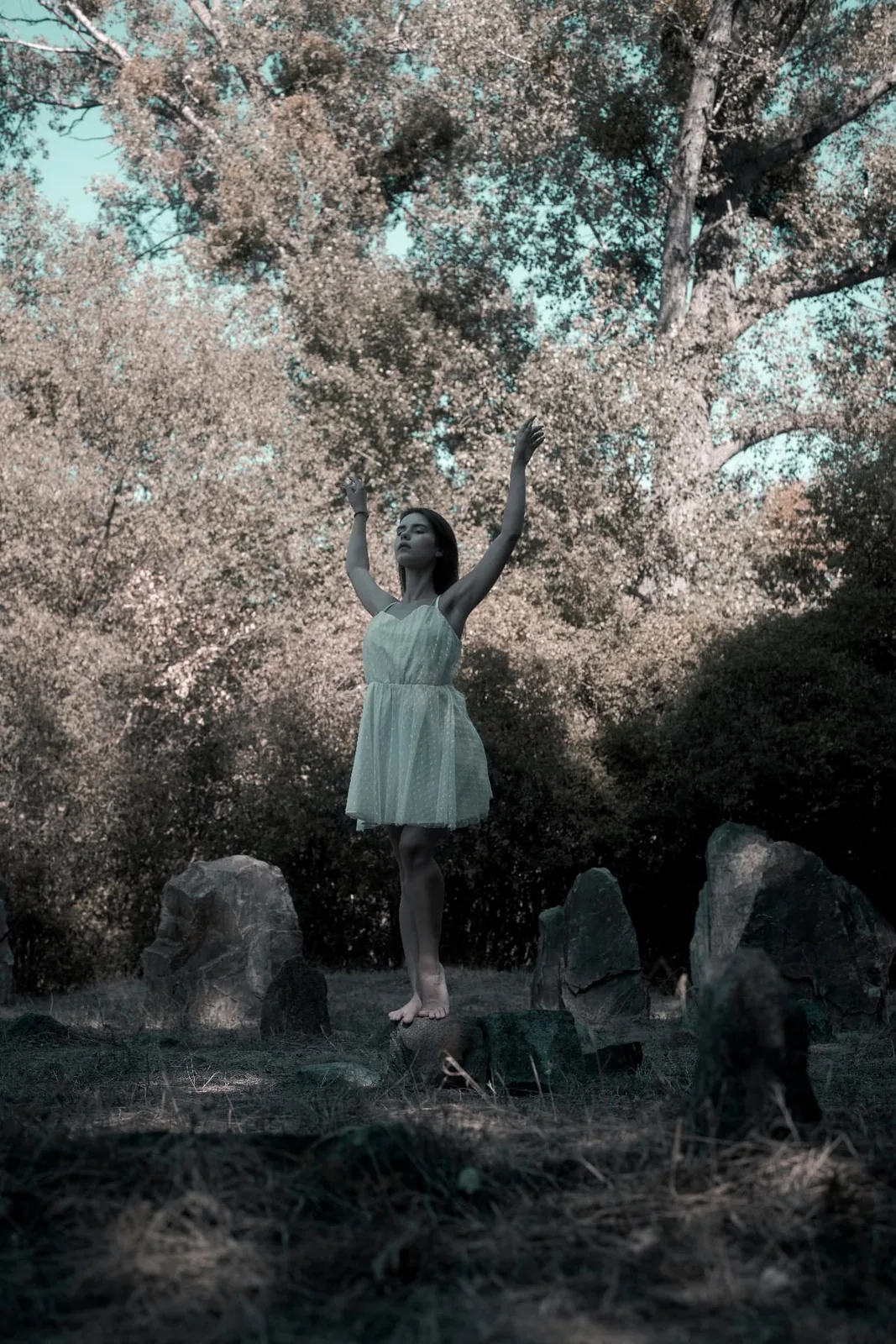
The location alone does not make an image
For me, the shoot also showed once again how relative the term “photo location” actually is.
Of course you can go looking for spectacular places. And an unusual background can take a lot of work off a photographer’s hands.
But it becomes more interesting for me when the location is only the beginning.
How much of it do I even leave in the frame?
How large is the person in relation to their surroundings?
What happens if I do not place myself in front of the most beautiful stone, but to the side of it?
What does the available light do?
And when does a photograph of a person in an interesting place actually turn into a coherent series?
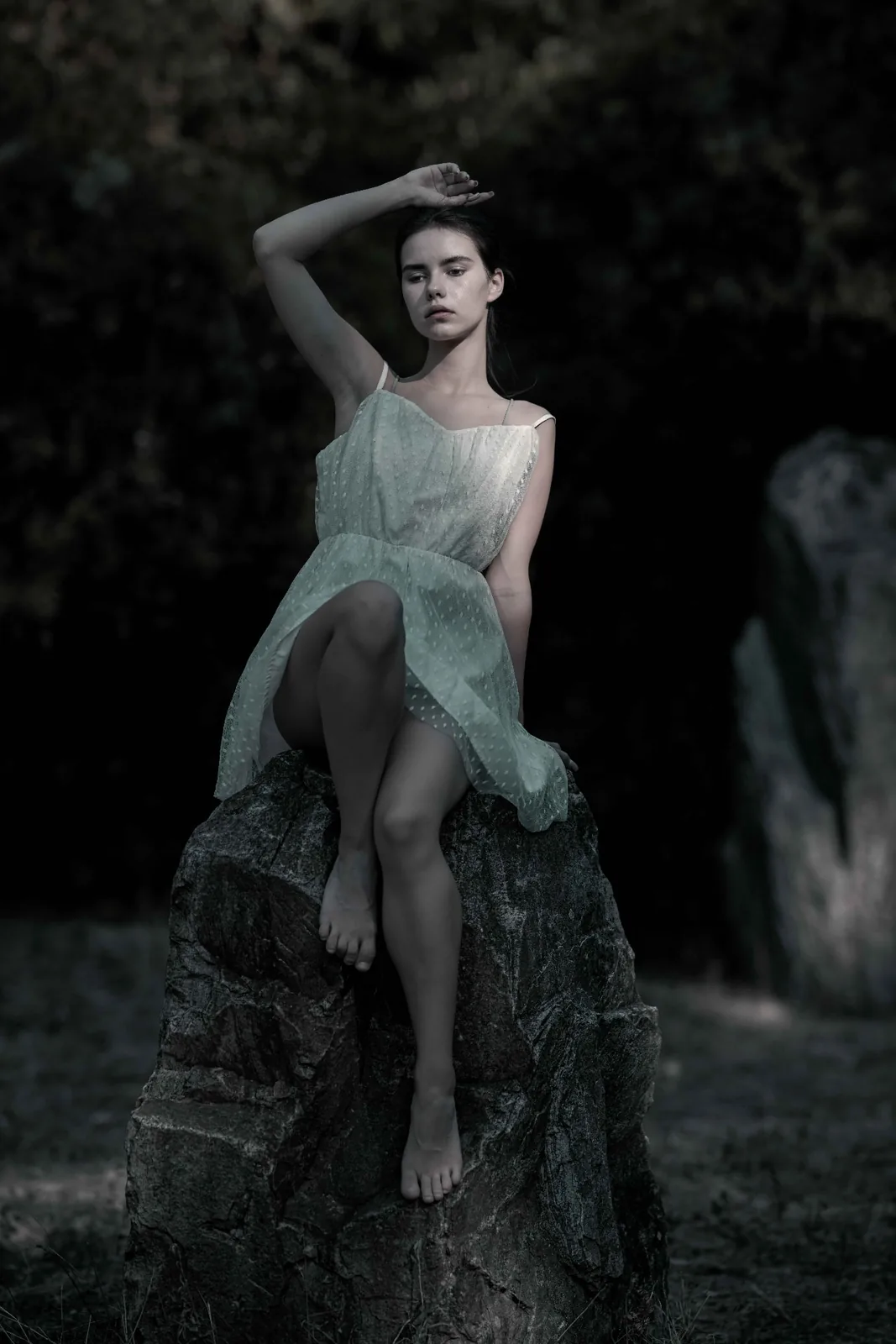
With BETWEEN STONES we did not define an answer for every image in advance.
We tried things out.
Some of it worked. Some of it did not. And a few of the images I like best today were not planned that way beforehand.
That is probably the greatest luxury of a free photographic project: you are allowed to follow an idea without already knowing where it ends.
BETWEEN STONES
In the end, a place on the Donauinsel turned into a series that, for me, is less about mysticism than about seeing.
About how differently a place can appear.
And about the fact that interesting images do not necessarily require ever new and more spectacular locations.
Perhaps it is sometimes more worthwhile to stay standing at a familiar place and to ask yourself one simple question:
What have I not yet seen here?
I will certainly be asking that question more often in Vienna.
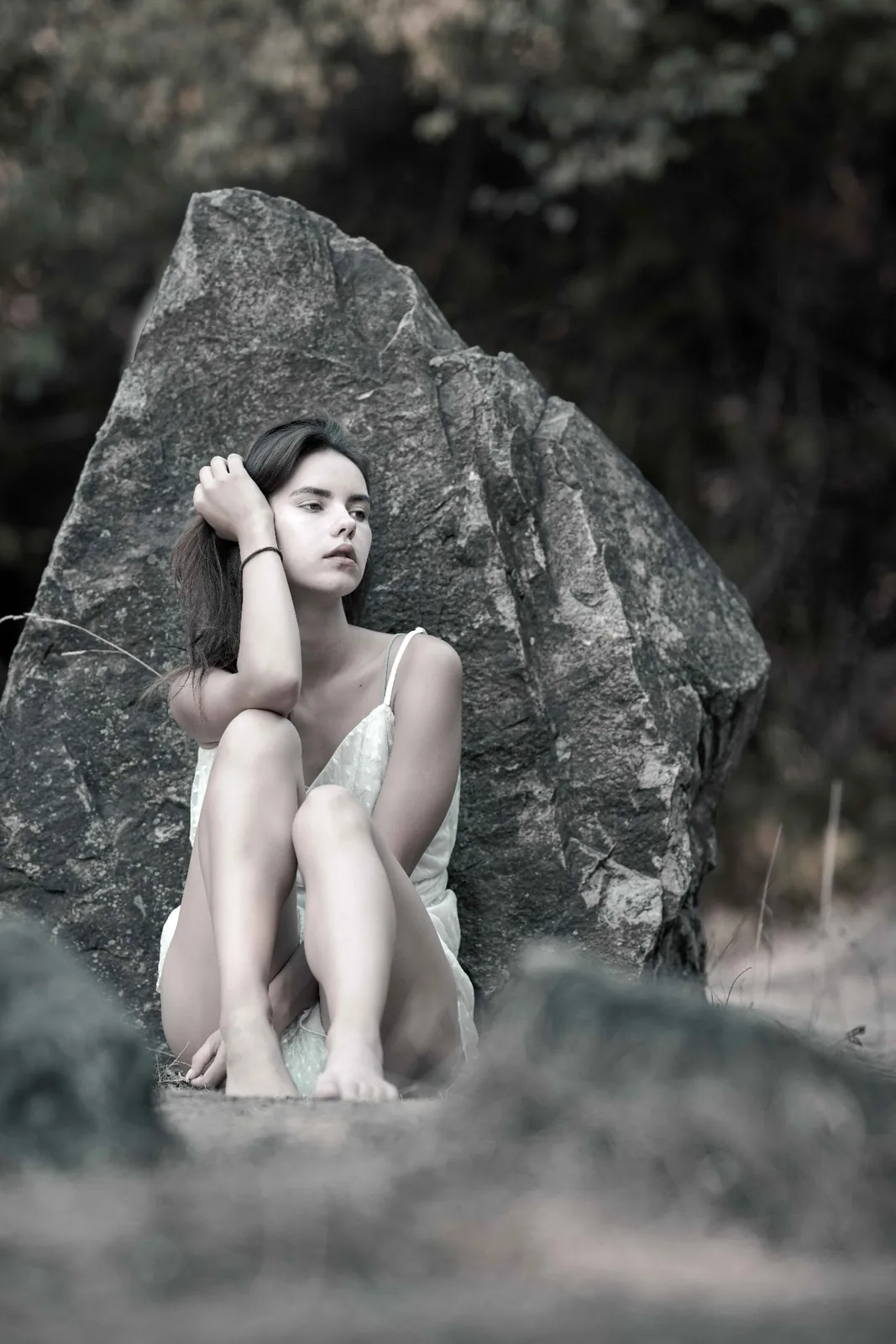
BETWEEN STONES · Vienna 2026
Model: Tiana · @ti_auraa
Photography: Peter Scholz · SCHOPHO
The stone circle on the Donauinsel – location and background
Anyone who would like to visit the stone circle on the Donauinsel in Vienna will find it in the 22nd district (Donaustadt), in a small grove between the Praterbrücke and the Stadlauer Ostbahnbrücke.
The site was erected in 1990 by Herbert Wimmer. It consists of several circles and a split stone at its centre. The arrangement serves as an astronomical calendar and makes it possible, among other things, to determine the summer and winter solstices as well as the equinoxes in spring and autumn.
The stone circle is therefore not a prehistoric Viennese Stonehenge. The name “Little Stonehenge” describes the unusual impression the site makes.
Anyone who would like to look more closely into its history and function will find further information at:
Austriasites – Steinkreis Donauinsel
Wiener Bezirksblatt – Little Stonehenge: Wiens mystische Steine
What have I not yet seen here?