At eight in the morning, Café Sperl belongs to a quieter Vienna.
Only a few guests are seated. Newspapers lie open beside coffee cups, porcelain clinks softly, and the aroma of freshly brewed coffee drifts through the room. Daylight enters through the tall windows overlooking Gumpendorfer Straße, falling across marble tables, dark wood and furniture that has witnessed generations of visitors.
For us, it is the beginning of a fashion shoot.
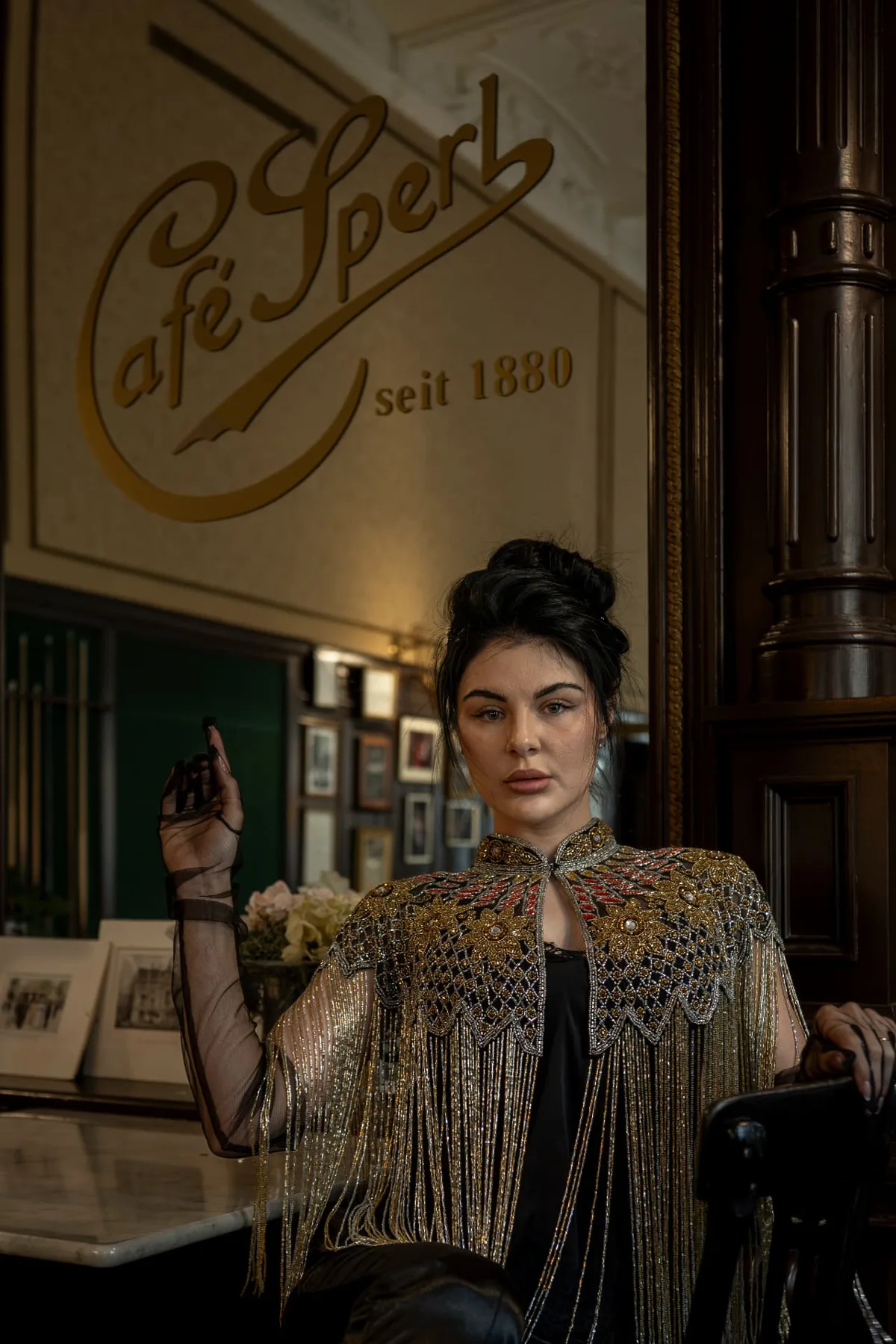
I have chosen to work entirely with natural light. No flash, no artificial illumination. Just the daylight entering the room and the atmosphere of a Viennese coffee house that has been part of the city since 1880.
Vienna was still the capital of an empire when the café first opened. Originally called Café Ronacher, it became Café Sperl later that same year.
The coffee house soon became a meeting place for artists, musicians and writers. People gathered to exchange ideas, debate, work or simply spend an afternoon in good company.
Among the artistic circles that met here were the Hagengesellschaft and the Siebener Club, whose members were connected to the emergence of the Vienna Secession. The composer Franz Lehár was another celebrated regular.
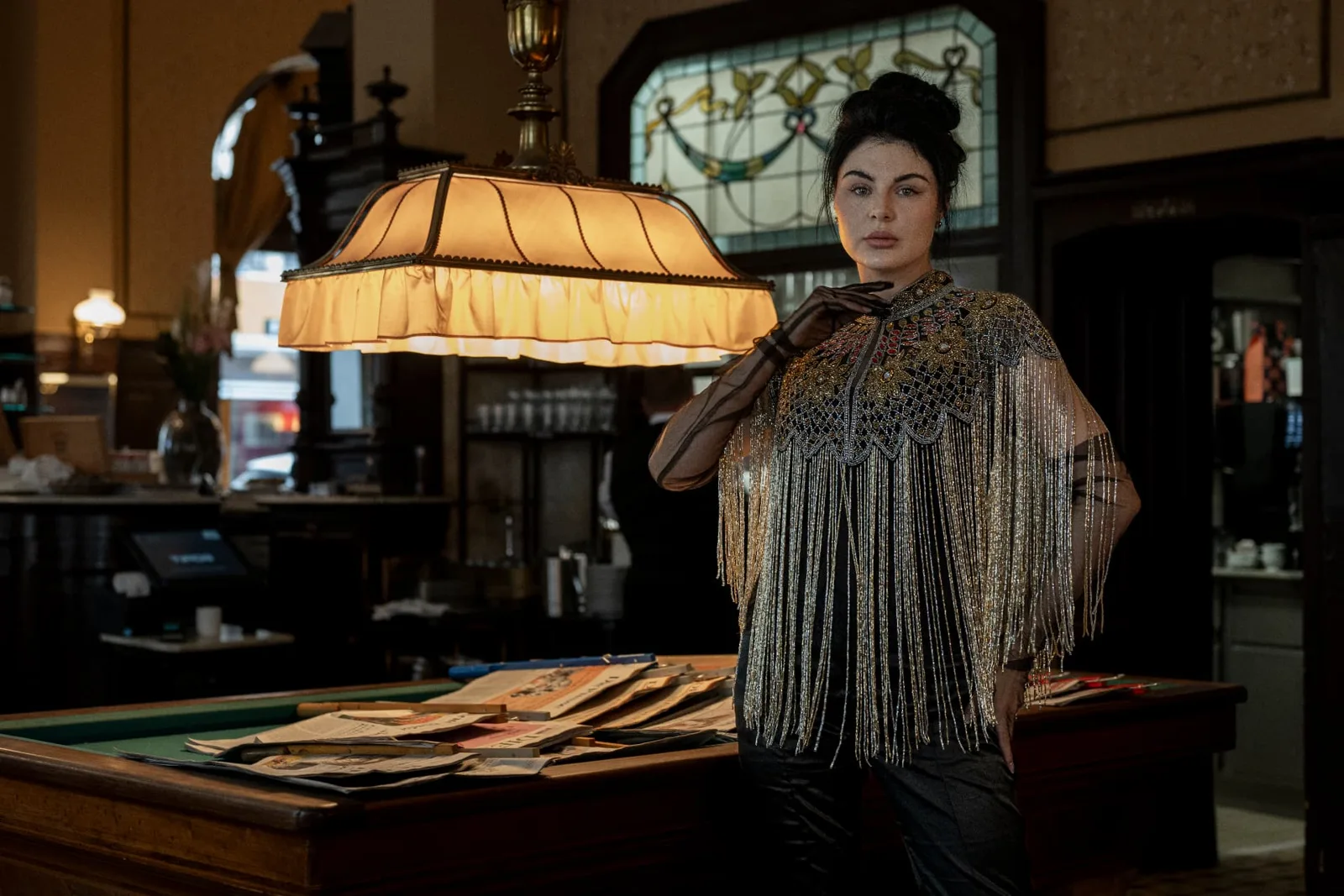
Looking around the café today, it is not difficult to sense that history. Not because the room has been turned into a museum, but because its mirrors, high ceilings, dark wooden panelling and carefully preserved furnishings still belong to everyday life.
Café Sperl does not need to display its past.
It lives with it.
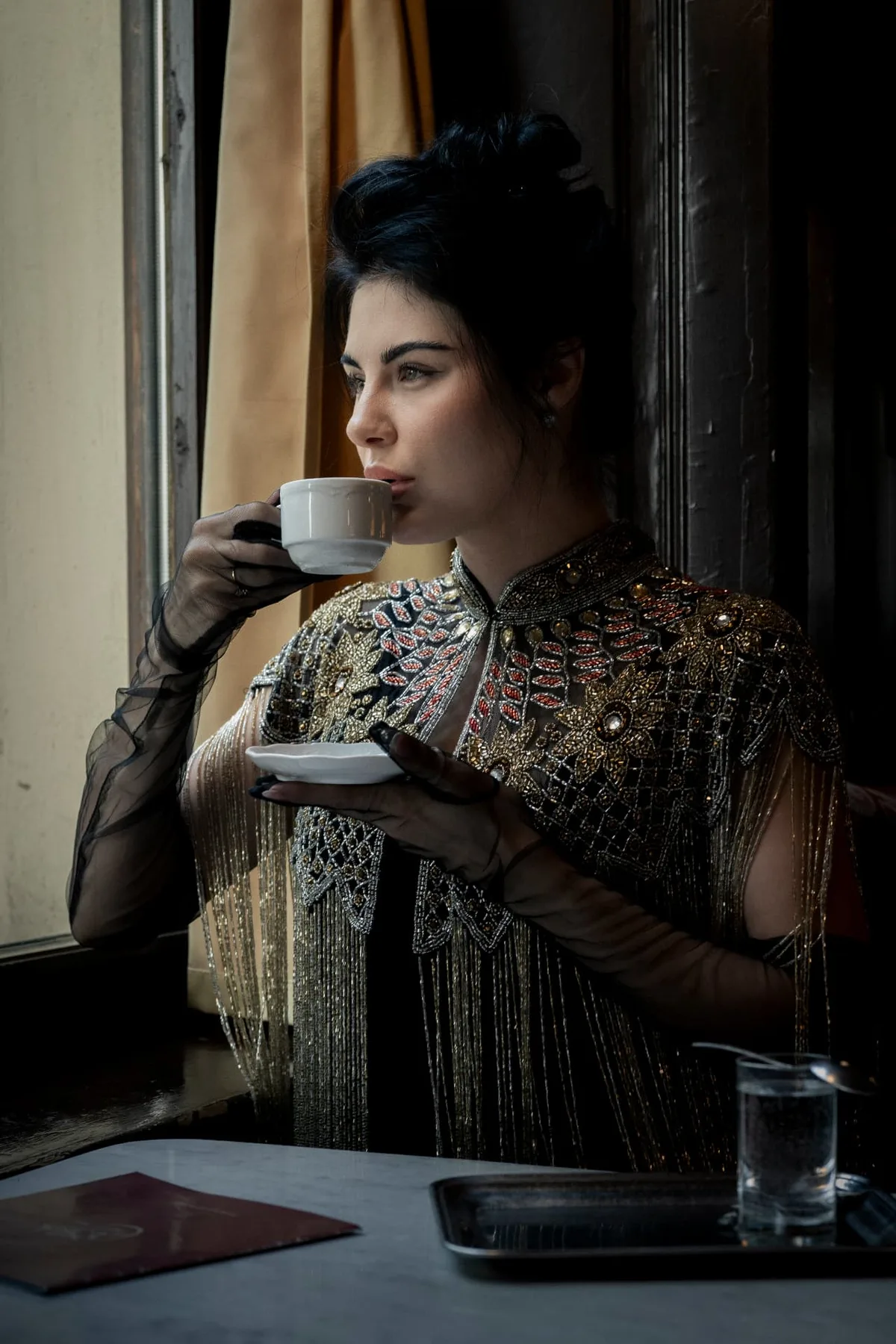
For a photographer, these rooms are both fascinating and demanding.
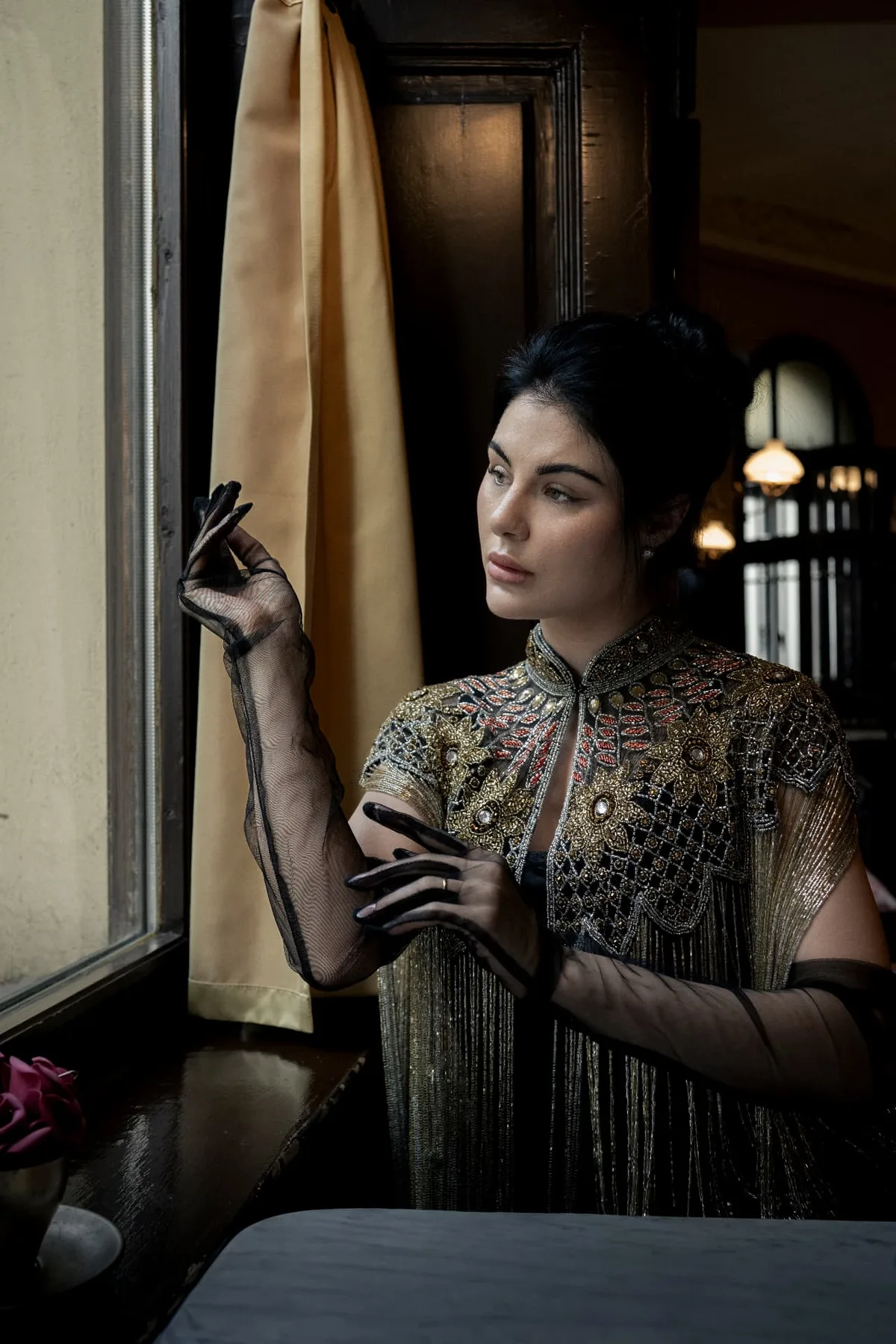
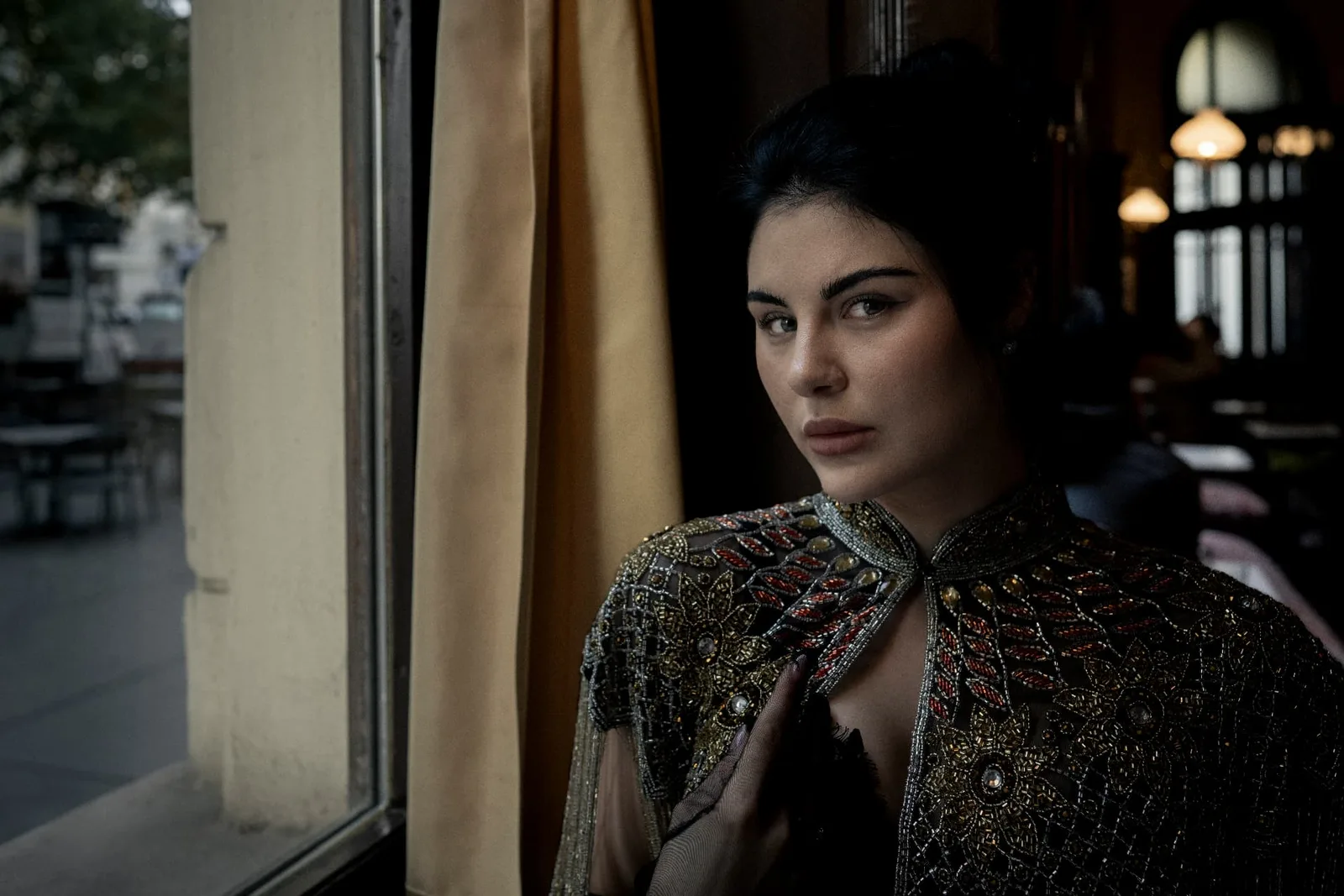
The tall windows are a friend and an adversary at the same time. They provide beautiful light, sometimes shaping a face almost like a painting. But they also create strong contrasts, deep shadows and reflections that cannot be controlled as easily as studio lighting.
A few steps can change an entire photograph.
Sometimes a slight movement brings a face out of darkness. Sometimes the shadows give a portrait its character. And sometimes an unexpected reflection introduces a second story within the frame.
I wanted to work with these qualities rather than eliminate them.
As the morning progresses, the café begins to change.
The handful of early visitors gradually becomes a much larger crowd. Conversations gather momentum. Chairs move. Waiters navigate between tables. The coffee house settles into its familiar rhythm.
We are photographing during normal opening hours, taking care not to disturb the guests or the staff.
Yet the daily life of the café is precisely what makes the experience meaningful.
An empty room might have been easier to photograph. It would not have been the same place.
Between photographs, we pause, watch the room and drink a rather impressive number of Melanges and große Braune — the Viennese double espresso served with cream or milk on the side.
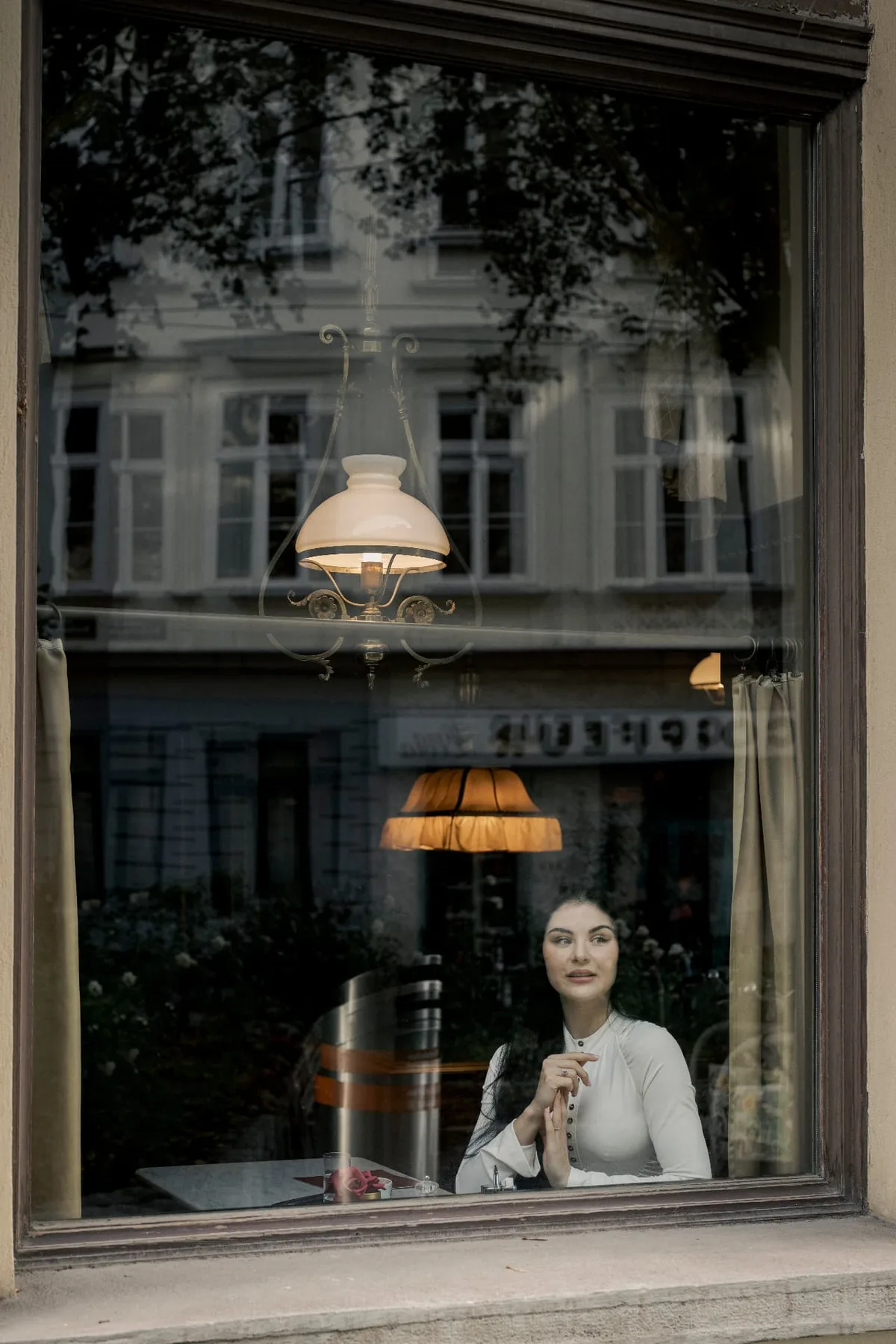
The Viennese coffee house has always been much more than a place to order coffee.
It has served as a meeting place, an extended living room, a reading room and an informal office. People came to meet friends, read the newspaper, become absorbed in conversation or simply enjoy a little time to themselves.
There is something special about being alone without feeling lonely.
A public place where you do not have to be productive. Where an afternoon does not need a purpose and a conversation does not have to lead anywhere.
In 2011, Viennese coffee house culture was included in Austria's national inventory of intangible cultural heritage, recognising a tradition that goes far beyond furniture, coffee and pastries.
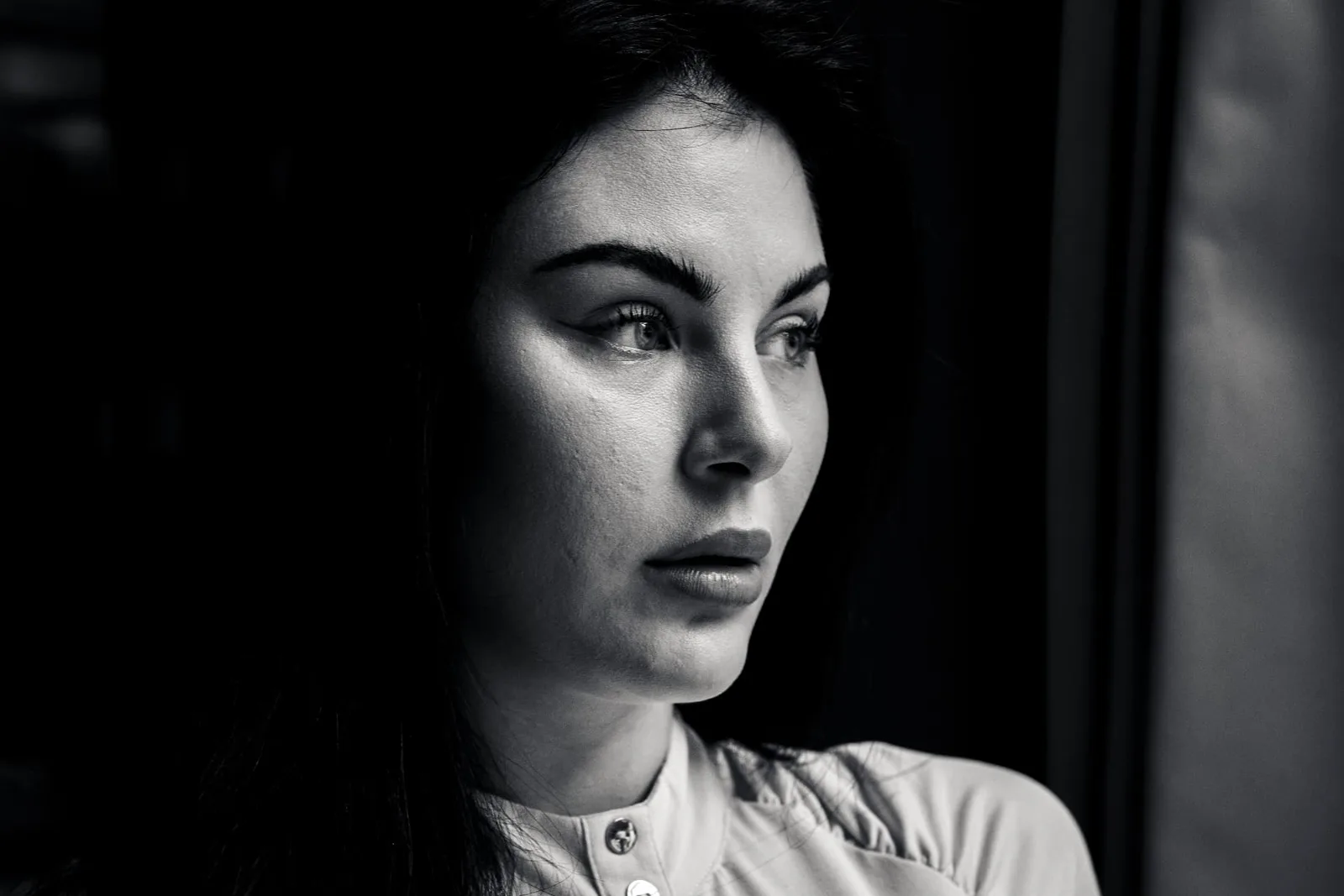
Many traditional Viennese coffee houses have disappeared over the decades. Others have changed so profoundly that little of their original character remains.
Café Sperl is one of the places where the connection between different centuries still feels tangible.
Here, surfaces do not need to look new. Furniture can carry the marks of use. Some corners remain gently in shadow.
Perhaps this is a kind of elegance that has become increasingly rare: the confidence not to follow every passing trend.
For our editorial, I wanted to introduce a contemporary counterpoint.
Modern fashion in a historic interior. New gestures among old mirrors, wood and marble. Images that neither recreate the past nor reduce it to a decorative backdrop.
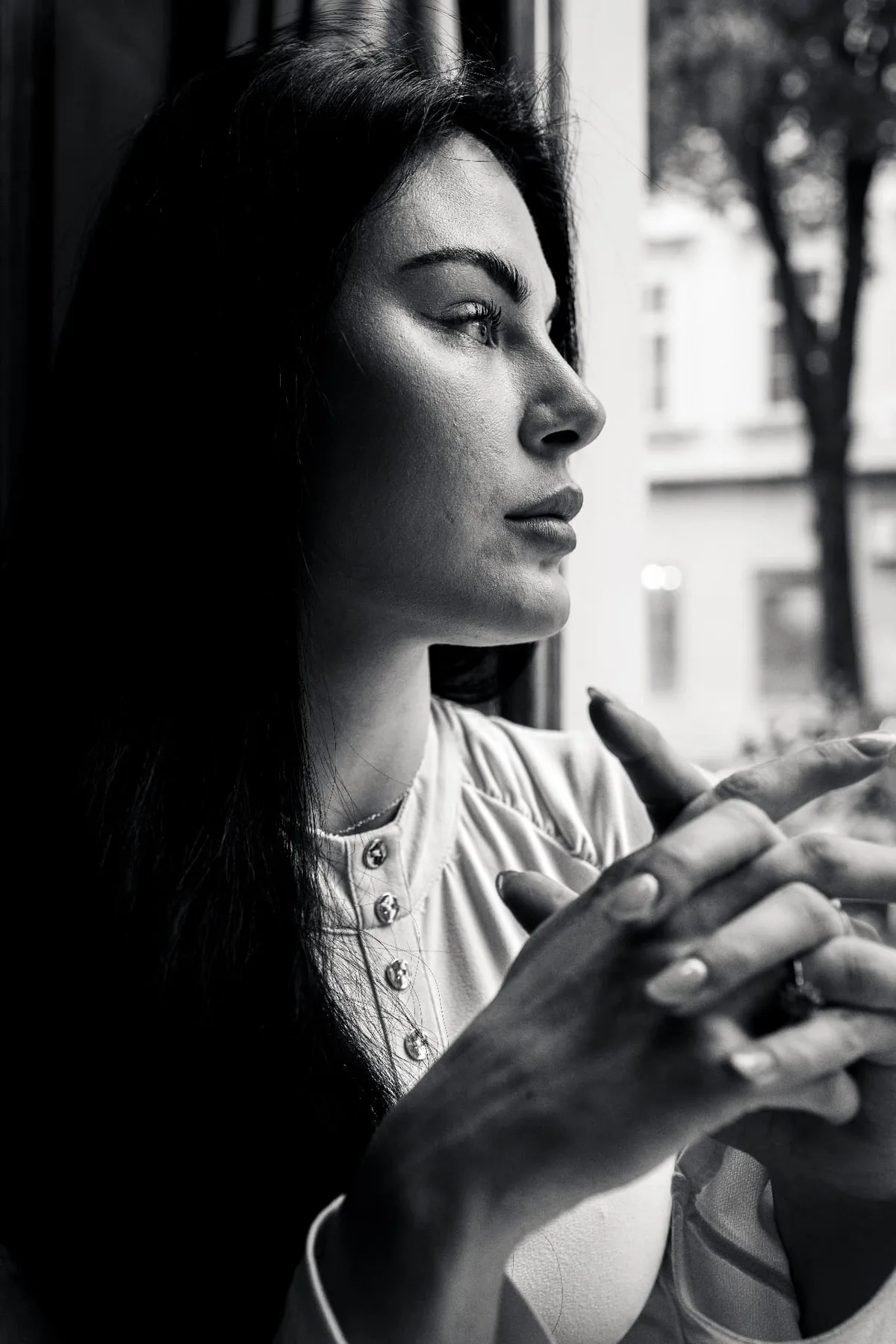
The greatest challenge of a shoot like this is not technical.
It is finding a perspective of your own.
An extraordinary interior does not automatically create an extraordinary photograph. And an elegant fashion look, on its own, does not tell a story.
What matters is the moment when light, space and human presence begin to interact. When a gesture unexpectedly echoes the architecture. When a glance towards the window reveals more than a carefully directed pose. When a reflection becomes essential to the image rather than something to remove.
You can prepare for such moments.
You cannot force them.
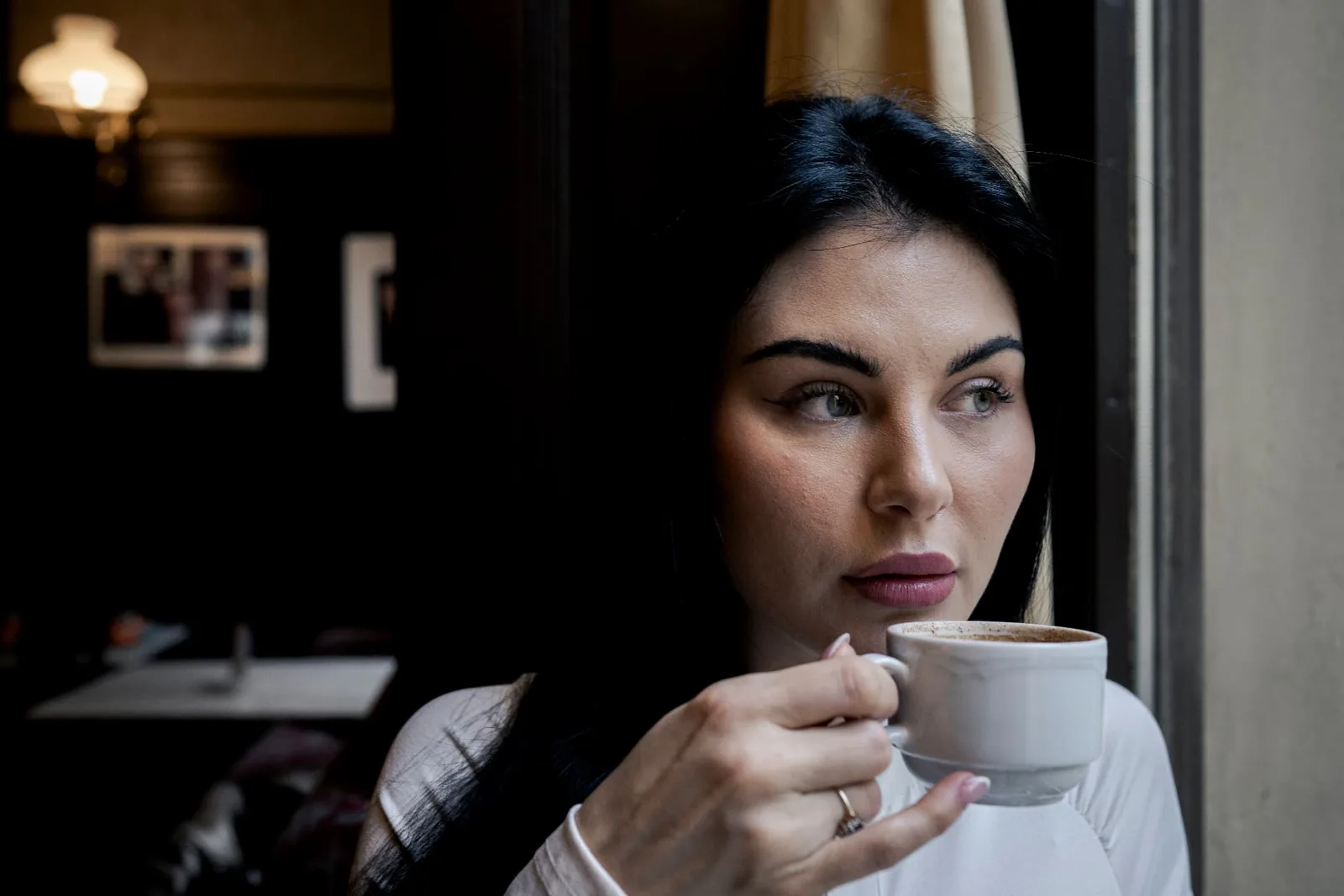
By the time we pack away our cameras, the quiet atmosphere of eight o'clock has long disappeared. The café is alive with conversations, occupied tables and arriving guests.
For Café Sperl, it is simply another ordinary morning.
I leave with a series of photographs that could not have been made anywhere else. Not merely because of the interior, but because of the light, the history and the people who continue to bring the place to life.
Stepping back onto Gumpendorfer Straße, I find myself thinking about the countless people who must have passed through the same doorway over the past 146 years.
Some came to meet someone. Others to spend a little time alone. Many, no doubt, simply for a good cup of coffee.
Tomorrow, Café Sperl will open its doors again.
And perhaps that is what makes it so remarkable.
Photography & Creative Direction: Peter Scholz | SCHOPHO
Model: Izunia Motyl · @izunia.motyl
Location: Café Sperl, Gumpendorfer Straße 11, 1060 Vienna, Austria
Fashion Editorial · Vienna · 2026
My sincere thanks to the team at Café Sperl for allowing us to photograph during regular opening hours. We did our best to interfere as little as possible with the daily operation, while having the opportunity to experience the atmosphere that makes this coffee house so special.