South of Padua, an Italy begins that few people know: volcanic hills, olive trees, vineyards, and two places that have kept a rhythm of life entirely their own.
Even on the approach, something about this landscape strikes you as unusual. From the flat plain south of Padua, individual, almost cone-shaped mountains rise abruptly. They seem to have grown straight out of the ground.
My first thought: these hills must be of volcanic origin.
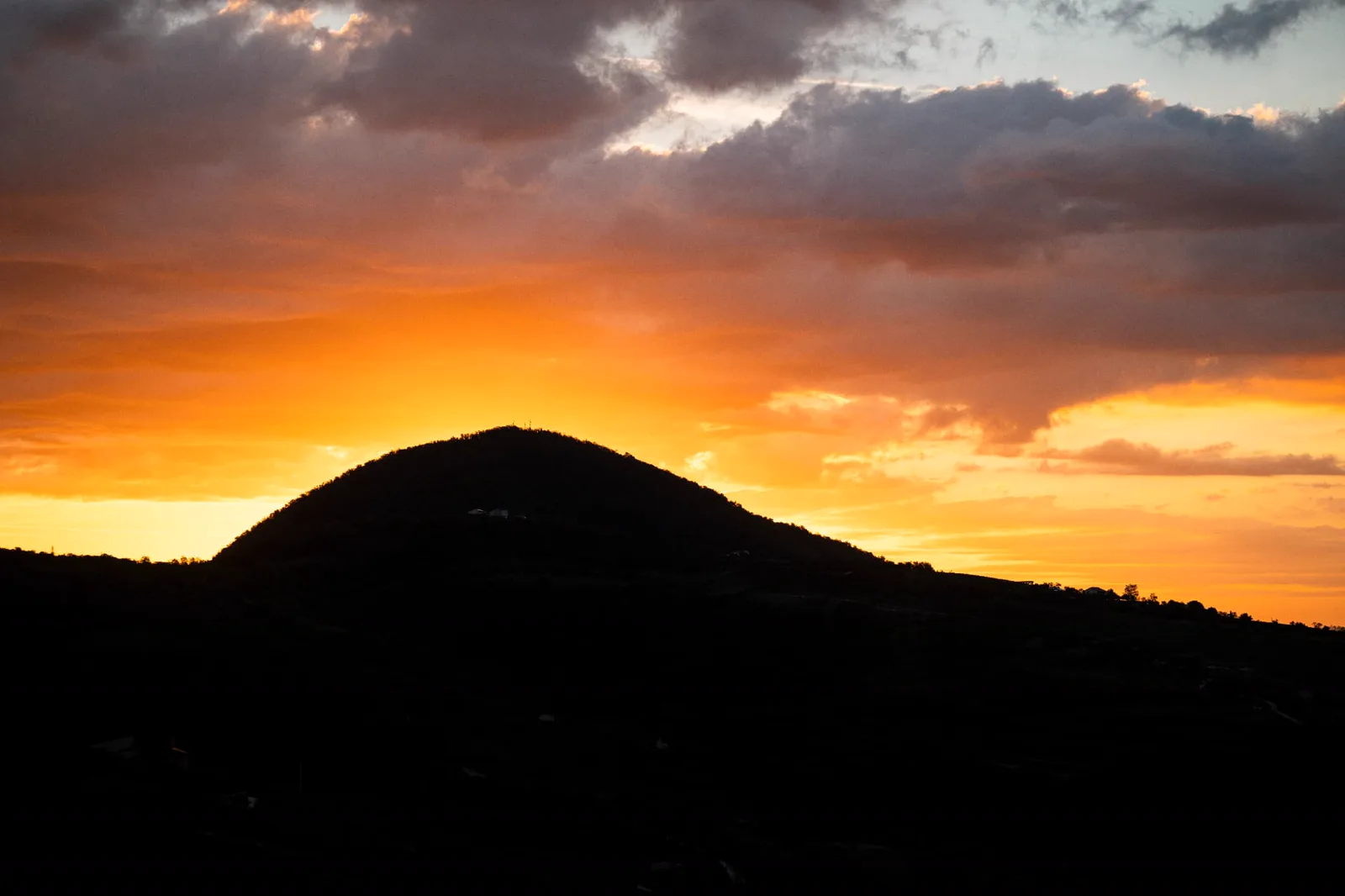
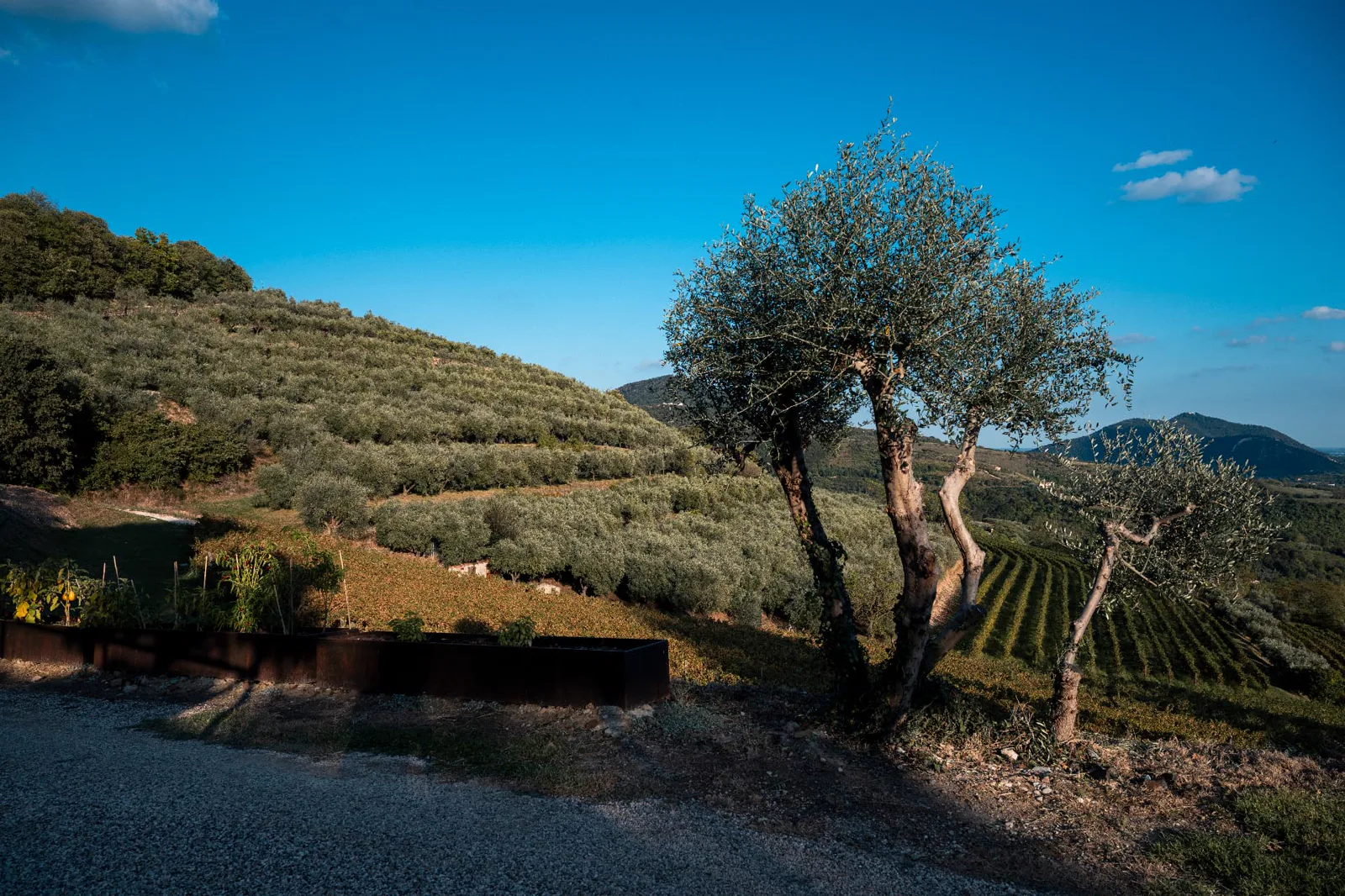
Indeed, the Colli Euganei were formed by volcanic activity. Today they do not form a continuous mountain range — they stand like single islands in the plain. Some are densely wooded, others draped with olive trees and vineyards. In between, narrow roads lead to small villages and up into the hills.
It is a landscape with a character entirely its own — striking in its form and, at the same time, surprisingly harmonious.
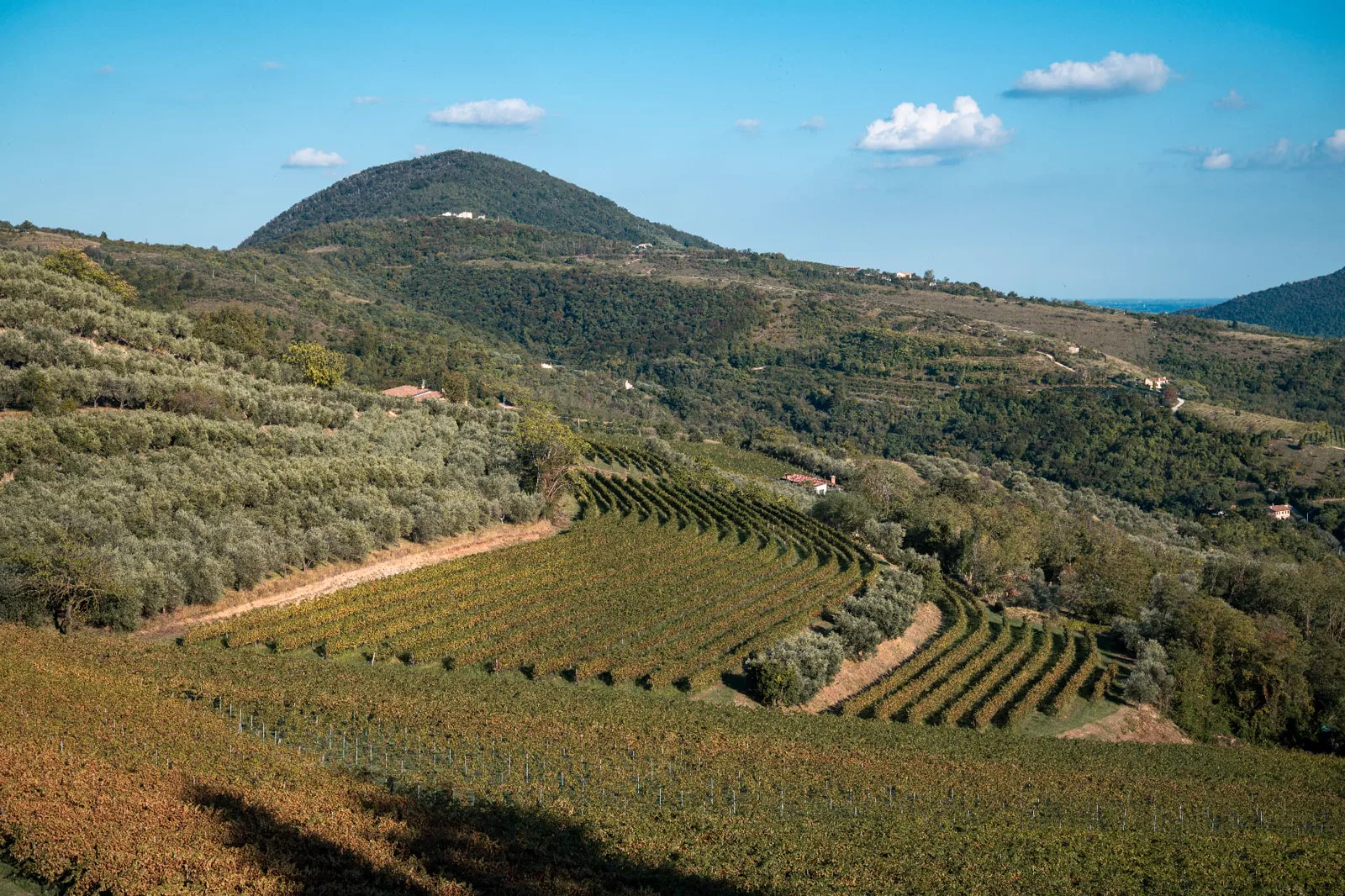
A region that has stayed quiet
The Colli Euganei lie only a few kilometres south of Padua. And yet they barely feature on the well-known travel routes through northern Italy.
That is a large part of their appeal.
There are no great crowds here, and hardly any places polished up exclusively for tourism. The region feels calm, unspoilt and pleasantly unhurried. Olive trees, vineyards and wooded hills merge into one another quite naturally.
No dense sightseeing programme is needed here. The landscape itself sets the pace. You drive along small roads, stop for a view, or sit longer than planned over a glass of wine.
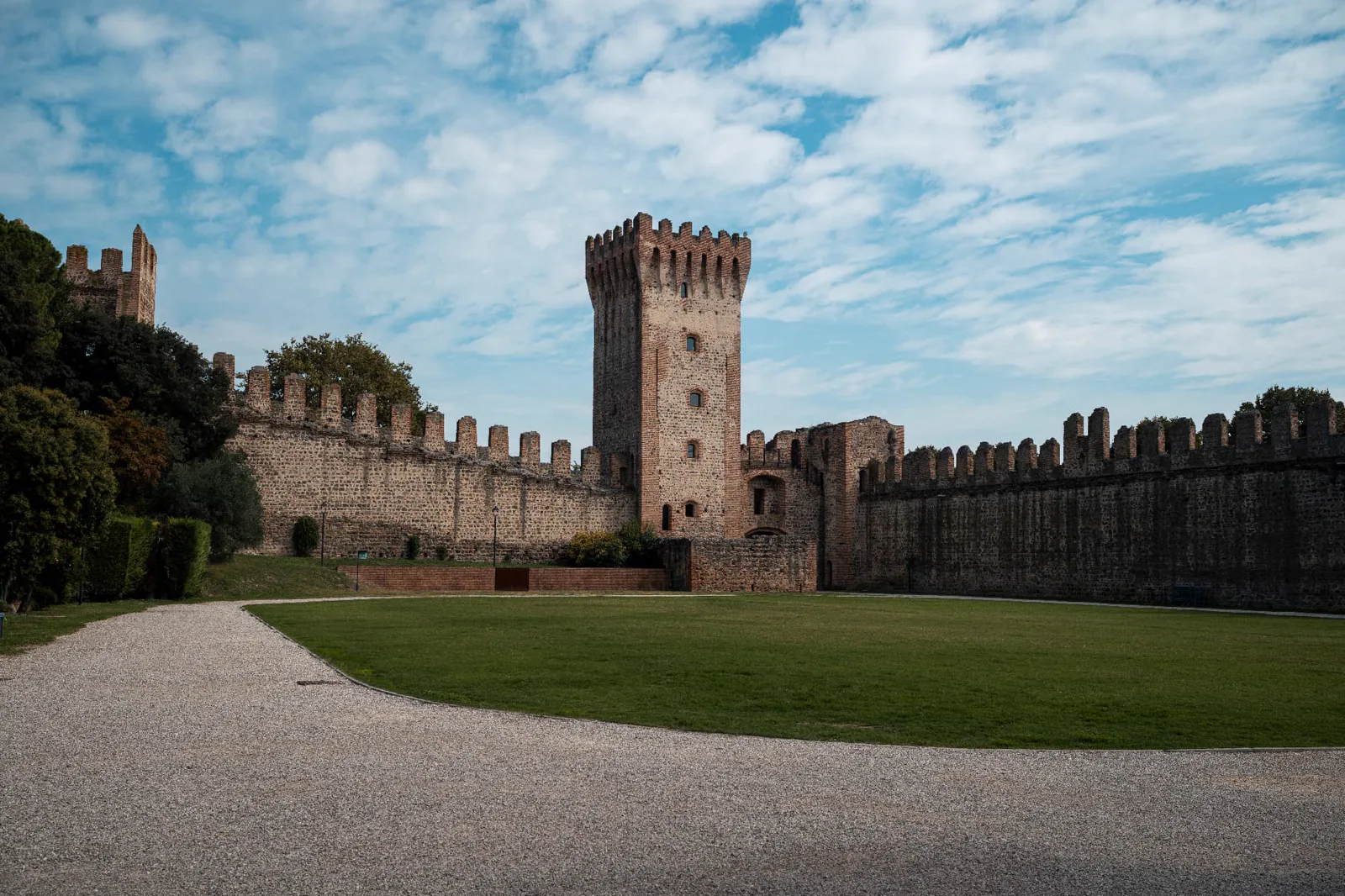
Este – a small town without staging
Este is a pleasant, quiet small town that has preserved much of its original character. It feels a little sleepy – and that is exactly what makes it agreeable.
Above the town rise the towers and reddish walls of the Castello Carrarese. Inside the historic fortifications lies a large park today. The castle shapes the townscape without turning Este into a tourist backdrop.
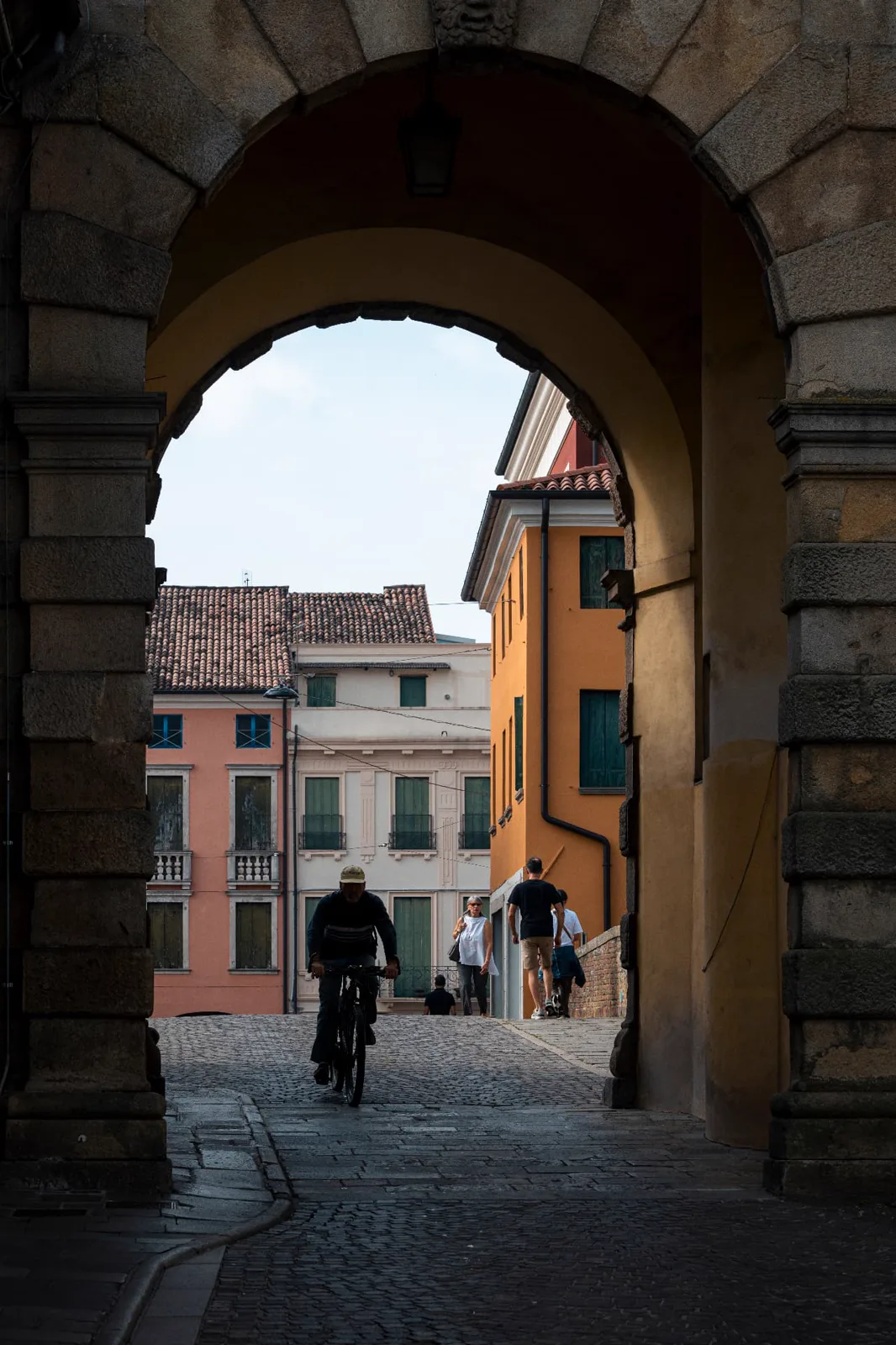
What stayed with us most was the large Piazza Maggiore. Around the square stand houses in different colours, among them arcades, small shops and cafés. Nothing feels spectacularly staged. Precisely for that reason the square feels genuine and alive.
Este is not a place that requires a long list of sights. It is enough to walk the streets, look around and let the atmosphere work on you.
Arquà Petrarca – up, and back down again
Arquà Petrarca shows a different side of the Colli Euganei. The historic village sits directly on the slope. Anyone exploring it on foot quickly notices that hardly anything here is level.
The narrow lanes lead steeply uphill and then just as steeply back down. In between stand old houses built of natural stone, small gardens and walls over which plants grow into the lanes.
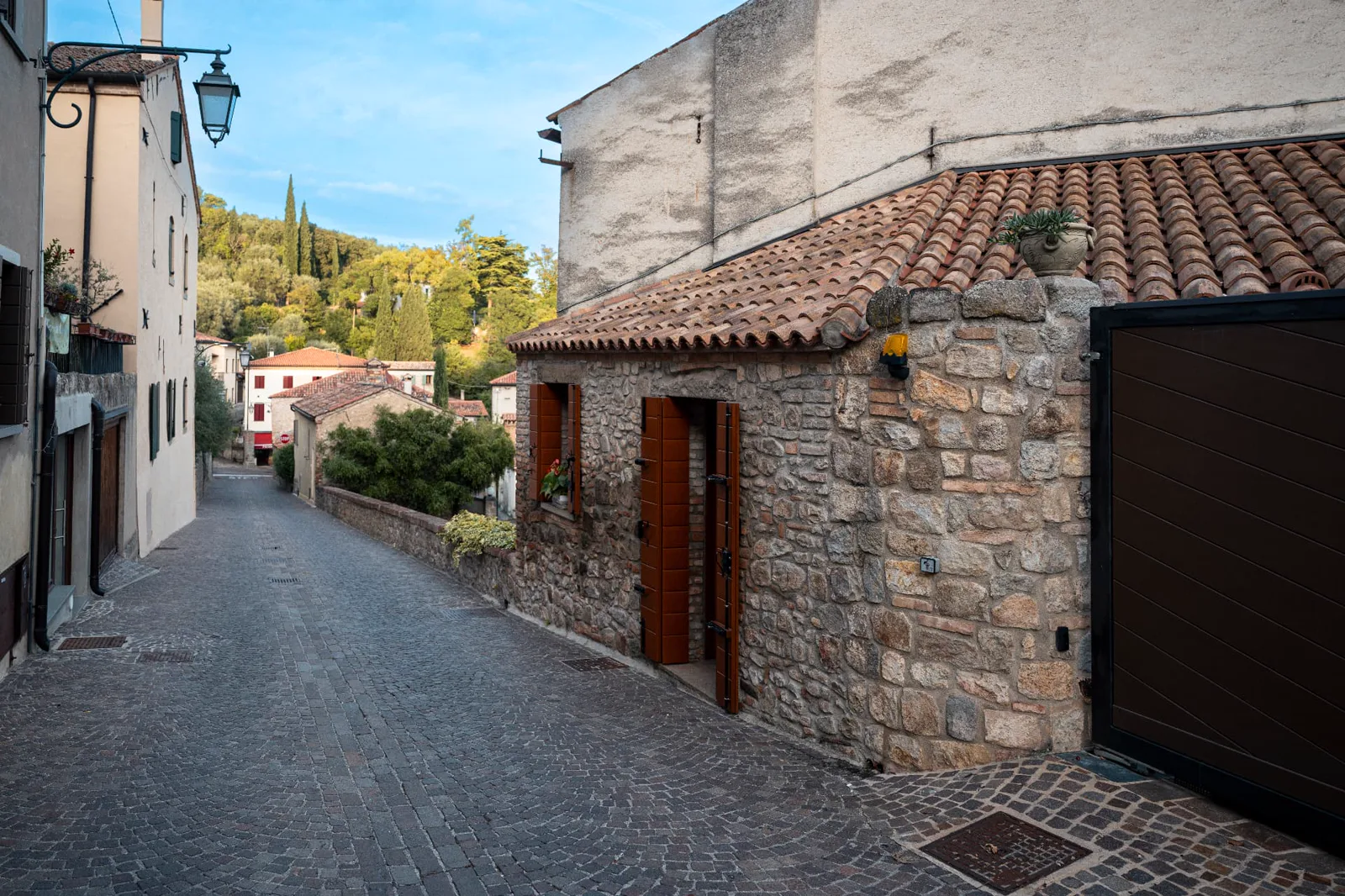
The village takes its name from the poet Francesco Petrarch, who spent the last years of his life here. His house and his tomb recall that connection. Yet even without his story, Arquà Petrarca would be worth a visit.
Above all, it is the hillside location that shapes the village. Behind the houses, views of the surrounding hills open up again and again. The light changes the colour of the stone, and every bend of the lanes offers a new subject.
A round walk is quite sporting, in fact. But going up and coming back down is precisely part of the experience of this place.
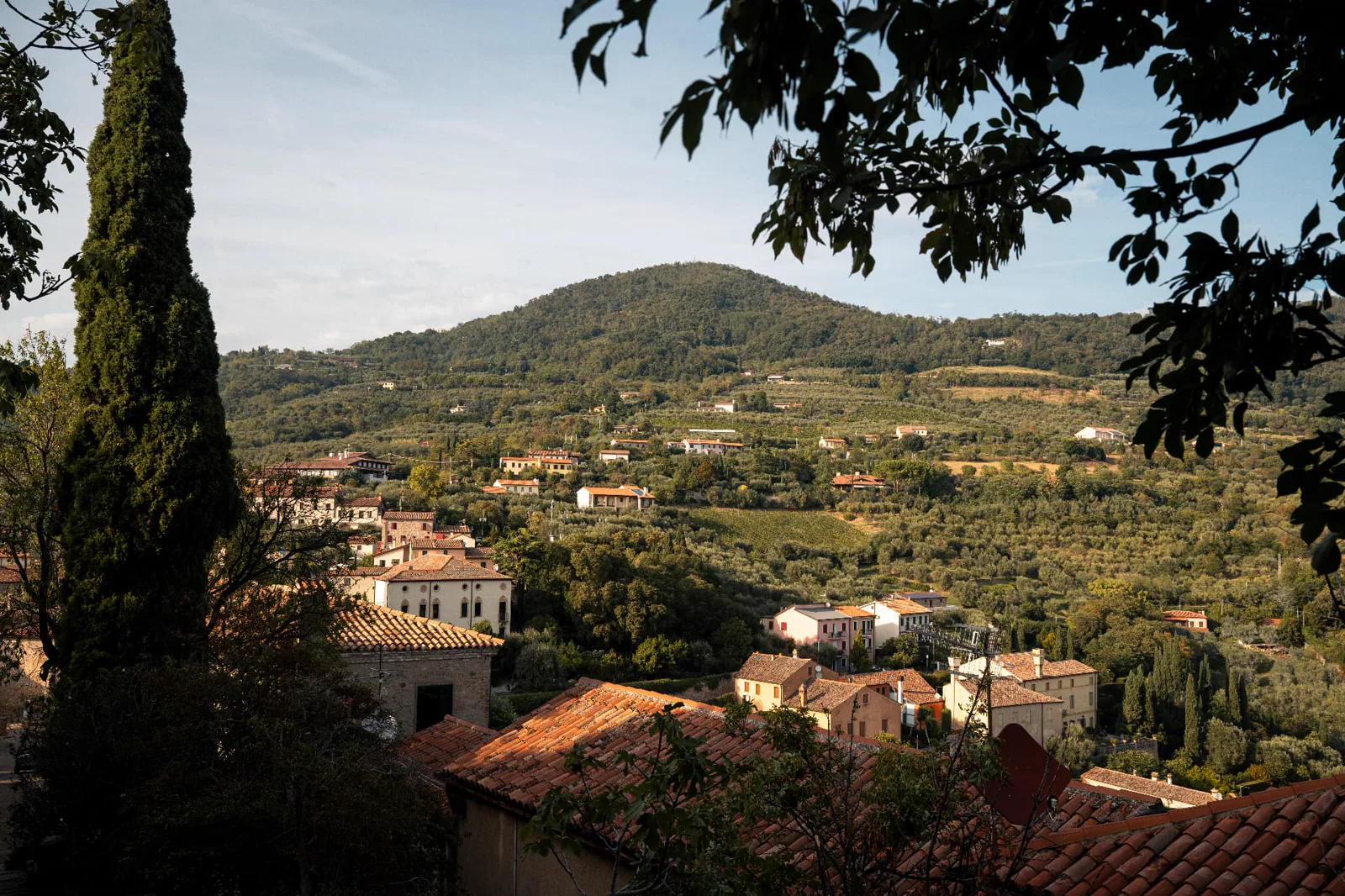
Le Volpi – right at the top of the hill
We discovered Le Volpi Wine Relais more or less by chance. Yet even the approach makes clear how exceptional the location is. The estate lies at the very top of a hill, surrounded by vineyards, with a magnificent view across the Colli Euganei.
It gets quieter still up here.
Our room had its own terrace. In the evenings we sat there, let the day fade out and enjoyed a good glass of wine. No programme, no reason to drive anywhere – only the quiet, the landscape and the slowly fading light.
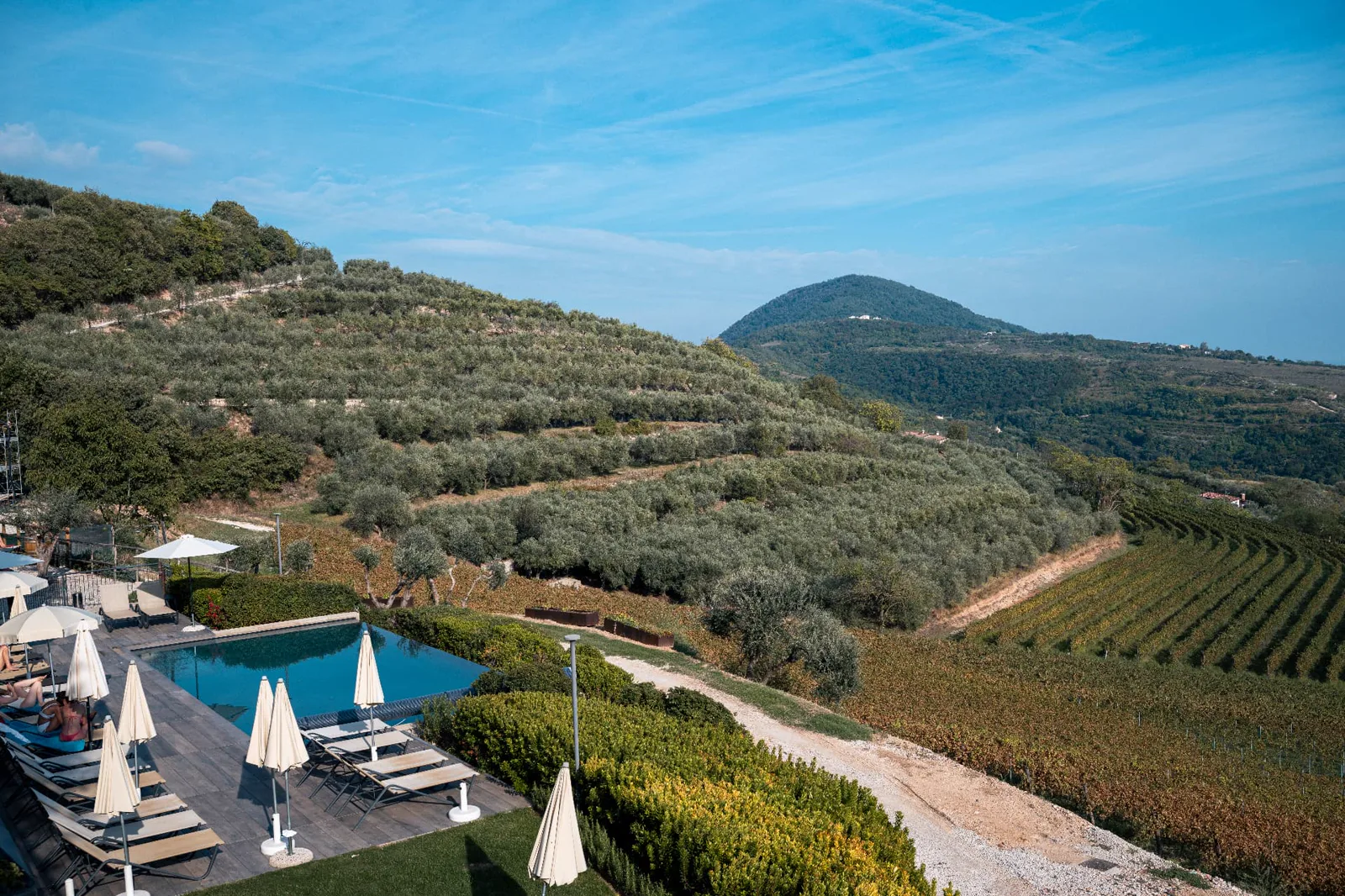
Breakfast was another special moment. Not because it was spectacularly staged, but because at Le Volpi everything fits together: the friendly people, the calm of the house, the location and the view out into the landscape.
The pool lies nestled between the house and the vineyards. It is not a decorative extra but a place where you genuinely want to spend a few hours and switch off.
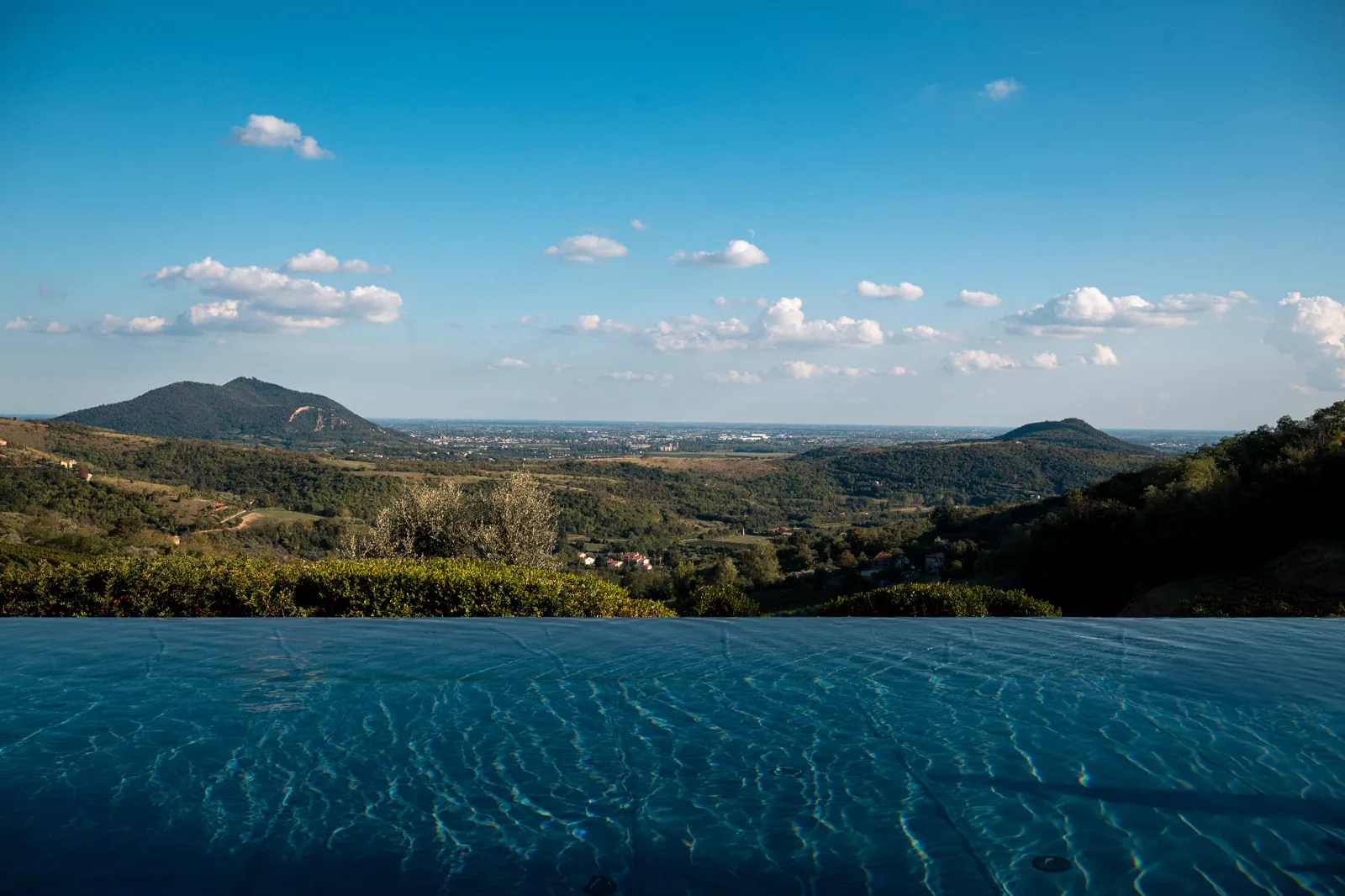
The wine belongs to it
Le Volpi is also a winery. Among the wines produced there are Chardonnay, red blends aged in barriques, and a dry Muscat.
This dry Muscat in particular was a discovery for me. The variety is often associated with sweet or strongly fruit-forward wines. Here it is made in a dry style, aromatic but never obtrusive – a genuinely good wine and my personal favourite at Le Volpi.
The wines belong to this place. They do not try to impress loudly; they accompany an evening on the terrace, a meal, or simply the view across the hills.
Who are the Colli Euganei for?
The Colli Euganei are not a region for travellers who want to tick off as many famous sights as possible each day.
They are for people who like it quiet. For anyone who appreciates good wine, consciously perceives landscape and light, and wants to unwind for a few days. Este and Arquà Petrarca offer enough history and atmosphere for small excursions. In between there is time for the pool, for a terrace and for a glass of wine in the evening.
Perhaps the Colli Euganei are so special precisely because they do not yet belong to the familiar images of Italy.
This is a part of the country one tends to discover by chance.
“And once you have, it is not so easily forgotten.”