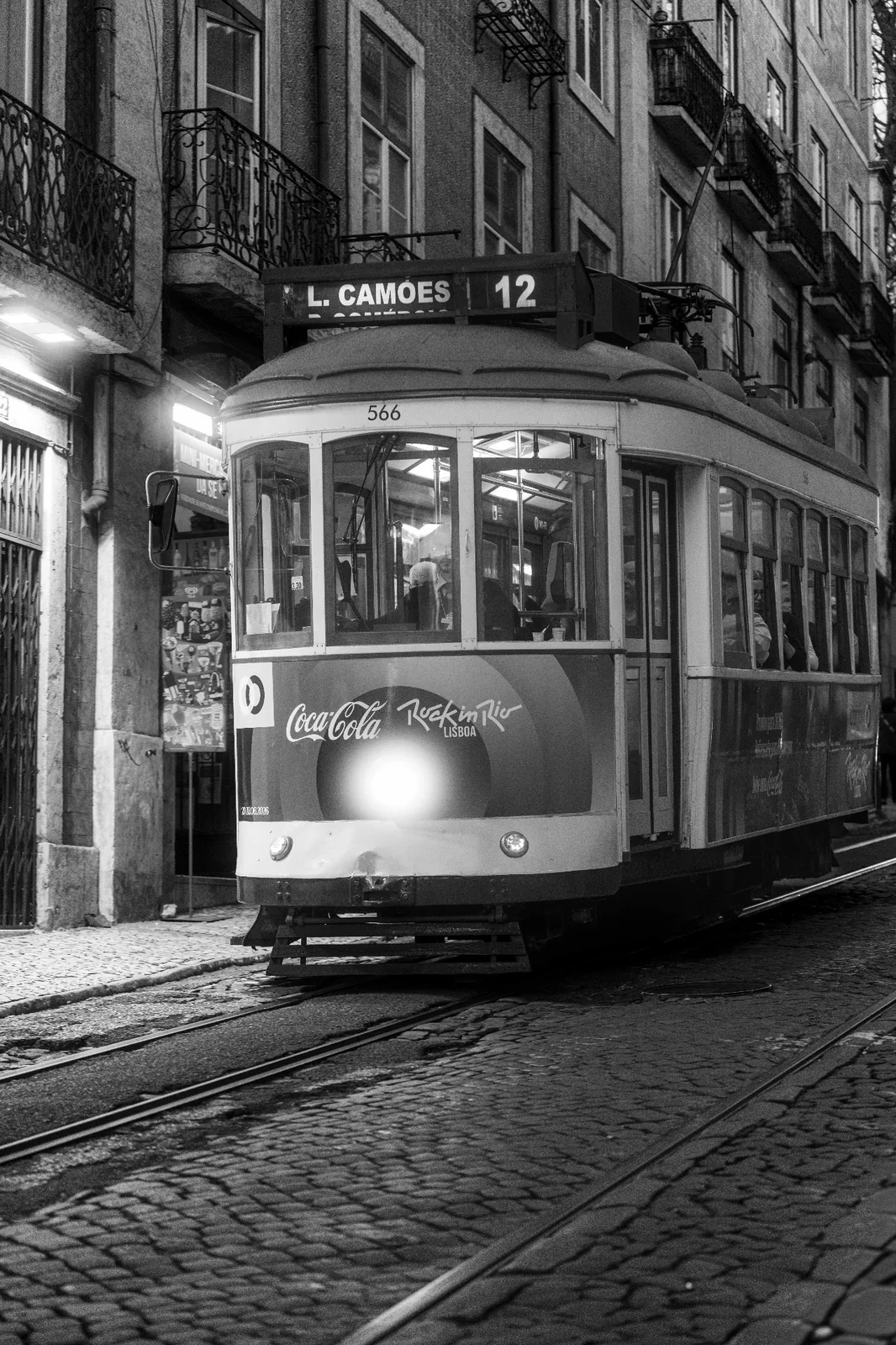
There are subjects you recognize instantly. And others you need to understand first. Lisbon's tramways belong to the latter. Since the late 19th century, they have been moving through the city — first as horse-drawn vehicles, later electrified, and today still part of a system that deliberately resisted standardization. While other cities modernized and replaced, Lisbon preserved something increasingly rare: character. Not as a staged element, but as a natural consequence. This city is not built for perfect lines. It is built for movement — for steep inclines, narrow streets, and curves that do not announce themselves. The tram does not respond with speed, but with adaptation. It slows down, it adjusts, it becomes part of the structure. And this is where its photographic quality emerges. Not as an object, but as a connection between space and time.
Largo do Limoeiro & Santa Luzia — When lines lead
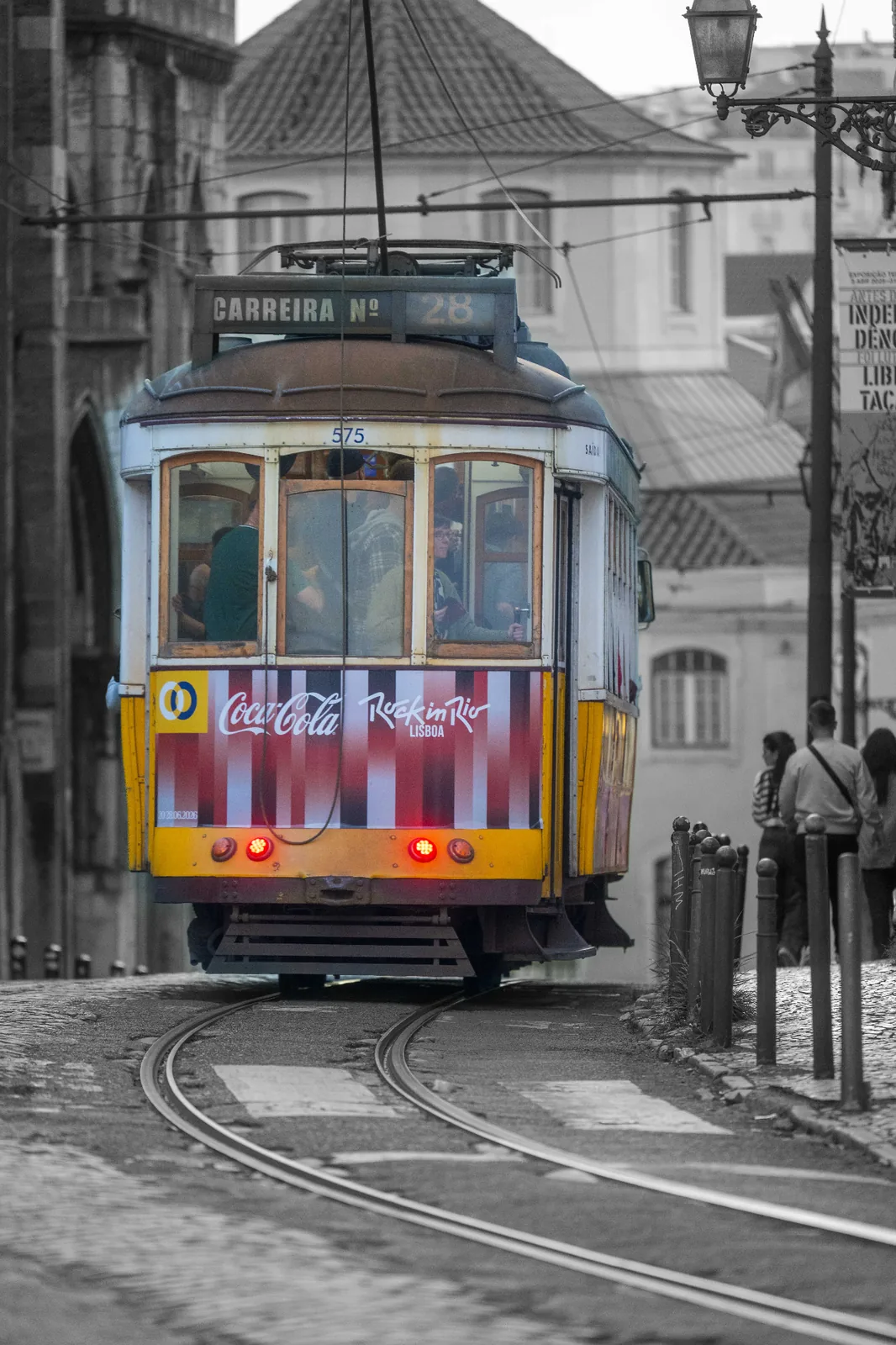
Between Largo do Limoeiro and Largo de Santa Luzia, the street begins to shape itself. It rises, it curves, it forces the tram into a movement that feels deliberate rather than smooth. This is where tension appears. The curves take control of the frame, guiding the eye and creating depth that feels natural rather than constructed. The tram is no longer the subject, but part of a system of lines, surfaces and light. A longer focal length compresses the scene, reducing distraction and bringing structure into focus. Just a few steps away, the miradouros of Santa Luzia and Portas do Sol open up the city — light, space, iconic views. And with them, attention. A place often seen demands a decision: follow the image — or create your own.Praça Luís de Camões — Balance as composition
At Praça Luís de Camões, the language of the city changes. The density dissolves, the movement becomes calmer, clearer, more controlled. The tram circles the square almost effortlessly, framed by architecture that provides structure without dominating. The tension here is not dramatic — it is balanced. Lines, proportions and motion interact in a way that feels precise, almost quiet. This is a place for reduction. For timing. For decisions that are subtle but intentional. Photography here is not about capturing the moment — it is about shaping it.Elevador da Bica — The moment is not negotiable
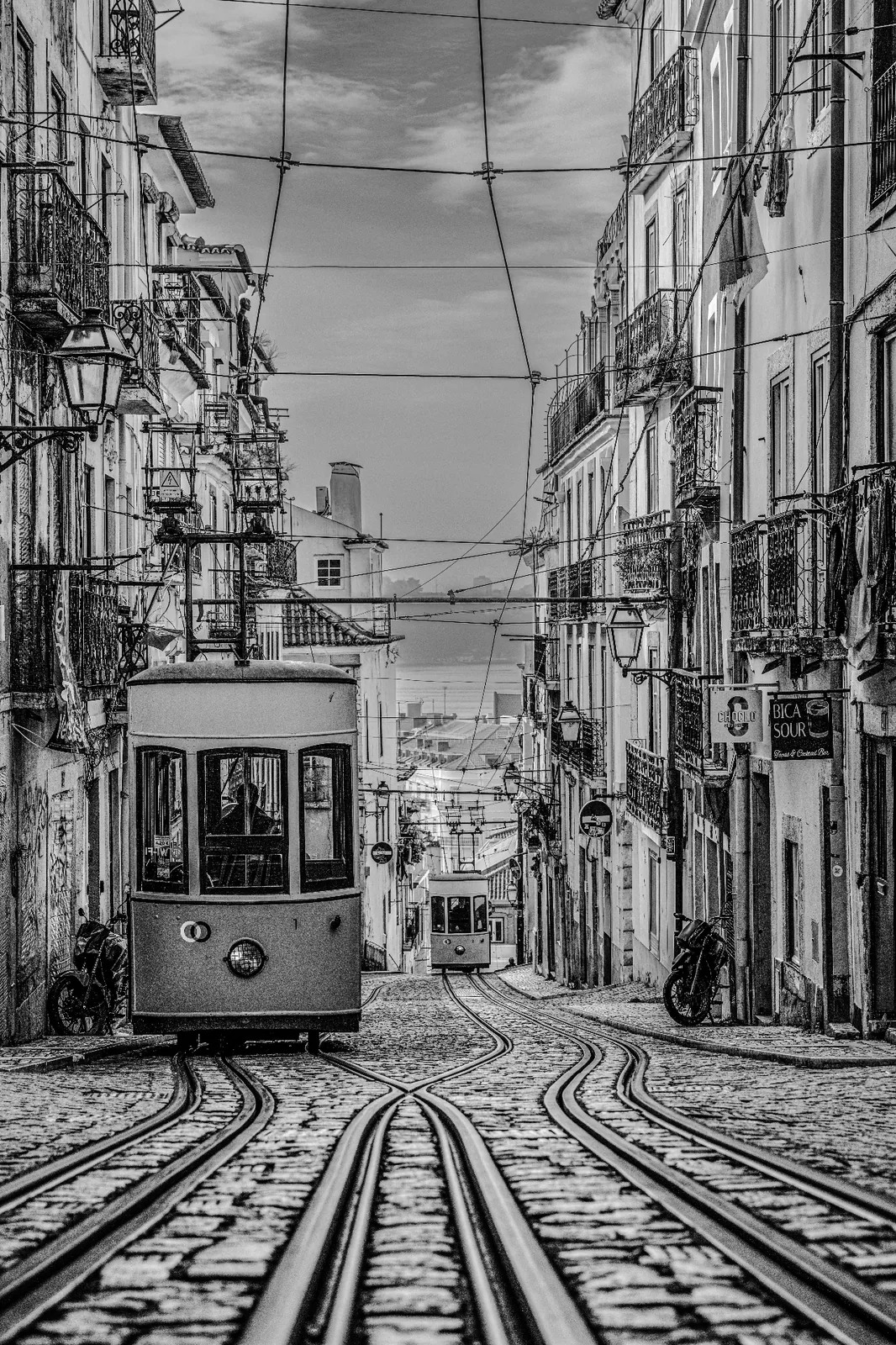
Some scenes cannot be repeated. The Elevador da Bica is one of them. From Largo Calhariz, the Rua da Bica de Duarte Belo drops steeply towards the river. Two cars move along the track simultaneously — one ascending, one descending. Their meeting point is everything. Brief, precise, unpredictable. The rails cut through the composition, leading the eye and reinforcing the steepness of the street. People enter and leave the frame, constantly reshaping the scene. This is not about control. It is about presence. A low perspective enhances the physicality of the slope. Distance creates clarity. Patience becomes essential. And when the moment arrives, there is no time to react — only to be ready.Movement as a form of precision
Lisbon does not explain itself. It reveals fragments, transitions, movement. The tramways are part of this structure — not as symbols, but as connections. Between past and present. Between architecture and rhythm. Between control and chance. Photographing them is not about capturing something spectacular. It is about recognizing what aligns. And perhaps that is the difference. Not every image remains. But those that do are never accidental. They emerge when everything briefly aligns — lines, light, movement. And for a moment, becomes precise.Not every image remains. But those that do are never accidental.